
A preventive electrical maintenance program is a planned, documented system of inspections, testing, servicing, and record-keeping designed to keep electrical systems safe, reliable, and code-compliant before failures occur. Known in the industry as an Electrical Preventive Maintenance (EPM) program, this approach replaces the costly “wait until it breaks” habit with scheduled, proactive care. For homeowners and property managers in the Grand Strand area, understanding what preventive electrical maintenance program involves is the first step toward protecting your property, your tenants, and your budget. The risks of skipping it are real: electrical fires, shock hazards, and sudden system failures that cost far more to fix than to prevent.
What a preventive electrical maintenance program involves: core components
Every effective EPM program is built on five interconnected components. Together, they form a repeatable cycle that keeps your electrical systems performing safely year after year.
1. Asset inventory and condition baseline
The program starts with a complete inventory of every electrical asset on the property. Panels, breakers, wiring, outlets, disconnects, and any specialized equipment like generators or EV chargers all get cataloged. A site-specific asset inventory is vital to assign appropriate maintenance intervals by criticality, age, and environment rather than relying on a generic annual schedule. A 30-year-old panel in a coastal home needs more frequent attention than a two-year-old panel in a climate-controlled commercial space.
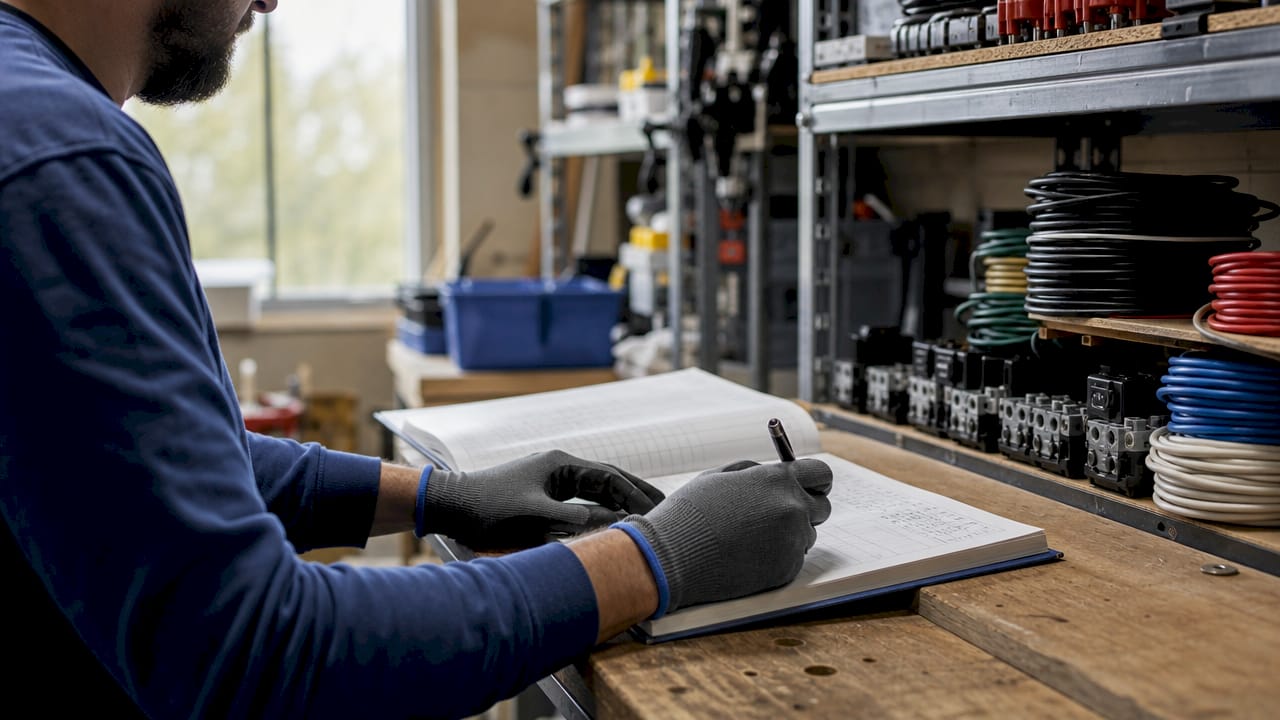
2. Visual inspections
Inspectors examine wiring insulation for cracking or discoloration, check panels for corrosion or burn marks, verify breaker labeling, and look for signs of overloading. These walkthroughs catch obvious problems that testing alone might miss. For property managers overseeing multifamily units, a residential construction checklist can serve as a useful reference for structuring what gets examined at each visit.
3. Testing methods
Testing goes deeper than visual checks. The three most common methods are insulation resistance testing, circuit breaker trip testing, and thermographic scanning. Circuit breaker testing intervals typically range from one to six years depending on the criticality of the equipment. Thermographic scanning uses infrared cameras to detect heat anomalies inside panels and connections. Critically, thermal imaging under load is required to detect hot spots accurately. Running the scan at light load can mask serious fire hazards entirely.
4. Routine servicing
Servicing tasks include tightening loose connections, cleaning dust and debris from panels, lubricating mechanical components, and replacing worn parts before they fail. These tasks sound minor, but a loose connection that goes unaddressed can arc and ignite surrounding materials.
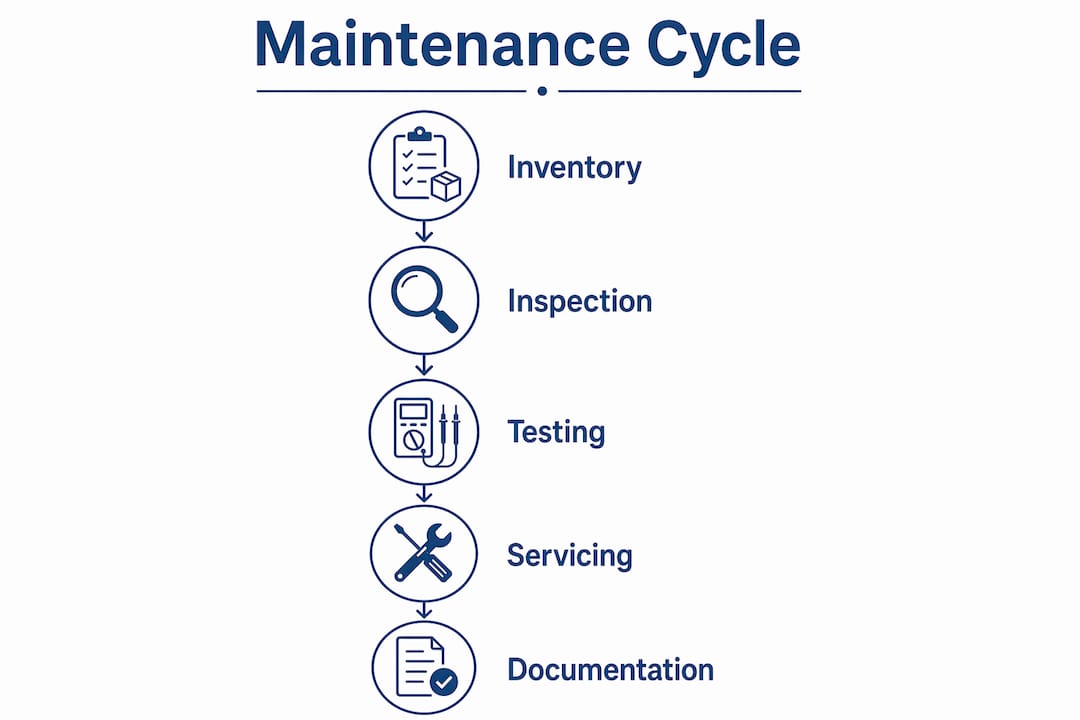
5. Documentation and reporting
Documentation and baseline records allow trending analysis to predict failures before they happen. Without written records, you cannot demonstrate compliance with NFPA 70B, and you lose the ability to spot patterns across inspection cycles. Every inspection, test result, and service action should be logged with dates, technician names, and findings.
Pro Tip: Never use a generic checklist downloaded from the internet without customizing it to your specific property. Specific, measurable checklist tasks like “check breaker trip function and record trip time” produce consistent results. Vague items like “inspect panel” leave too much room for human error and inconsistent inspections.
How preventive maintenance supports safety and regulatory compliance
The regulatory stakes for electrical maintenance rose significantly in 2026. NFPA 70B became a mandatory standard as of April 2026, requiring documented electrical maintenance programs covering specific inspection, testing, and safety procedures. This is no longer a best-practice recommendation. It is a legal requirement for facilities with electrical infrastructure.
OSHA regulations independently require employers and property managers to maintain electrical systems in safe operating condition. Failing to document your maintenance activities leaves you exposed on two fronts: regulatory penalties and civil liability if an incident occurs.
The safety case is equally direct:
- Documented maintenance reduces the risk of electrical fires by catching overloaded circuits, degraded insulation, and loose connections before they ignite.
- Regular testing identifies shock hazards from faulty grounding or damaged wiring.
- Trending data from consistent records flags equipment that is deteriorating faster than expected.
Documented maintenance history is also critical for insurance purposes. Insurers increasingly ask for maintenance records when processing claims related to electrical incidents. A property with no records faces a much harder claims process than one with a clean, consistent maintenance log.
Maintenance must be performed by qualified personnel who have demonstrated skills and knowledge of electrical systems. Qualified workers with documented training minimize hazards and satisfy both NFPA 70B and OSHA requirements.
For homeowners, this means hiring licensed electricians rather than relying on general handymen for inspection and testing work. For property managers, it means verifying that any contractor you hire carries documented qualifications, not just a business card.
Reactive vs. preventive vs. predictive: which strategy fits your property?
Understanding the differences between maintenance strategies helps you build a program that fits your property’s actual risk profile.
| Strategy | Timing | Method | Best for |
|---|---|---|---|
| Reactive | After failure | Repair or replace | Low-criticality, easily replaced equipment |
| Preventive | Calendar-based | Scheduled inspections and servicing | Most residential and commercial properties |
| Predictive | Condition-based | Thermal imaging, IoT sensors, vibration analysis | High-criticality facilities, large commercial properties |
| Prescriptive | Data-driven | AI analysis of sensor data to prescribe actions | Large industrial or campus-scale facilities |
Reactive maintenance is often perceived as cheaper but leads to greater risk and cost than preventive approaches. A breaker that fails unexpectedly in a rental unit means emergency call-out fees, potential tenant displacement, and possible property damage. The same breaker caught during a scheduled inspection costs a fraction of that to replace.
Predictive maintenance adds a layer of precision by using tools like thermal cameras and IoT-connected sensors to monitor equipment condition in real time. For a single-family home, full predictive monitoring is overkill. For a property manager overseeing a 50-unit building or a commercial strip, the investment pays off quickly by reducing unnecessary scheduled visits while catching real problems early.
Most homeowners and property managers operate best with a preventive strategy as the foundation, supplemented by predictive tools like annual thermographic scans on high-load panels.
Pro Tip: If you manage multiple properties, consider staggering your inspection schedules so you are never hitting every property in the same month. This spreads your budget, keeps your licensed electrician available, and prevents the backlog that causes deferred maintenance to pile up.
How to implement an electrical maintenance program for your property
Setting up a program from scratch is straightforward when you follow a structured sequence.
-
Conduct a full inventory and baseline assessment. Walk every unit, mechanical room, and common area. Catalog every panel, breaker, outlet, and piece of electrical equipment. Note the age, condition, and any visible concerns. This baseline is your starting point for every future inspection.
-
Establish a maintenance schedule aligned with NFPA 70B guidelines. Use your inventory to assign inspection and testing intervals based on equipment criticality and age. High-load panels in commercial kitchens need more frequent attention than standard residential panels in low-use spaces.
-
Hire qualified electrical professionals. Only licensed electricians with documented training should perform testing and servicing. For electrical safety tips and guidance on what to look for between professional visits, Gregbeverlyservices provides practical resources for Grand Strand homeowners.
-
Build specific, site-tailored checklists. Generic checklists produce inconsistent results. Each checklist item should name the exact equipment, the test or inspection to perform, the acceptable result range, and where to record findings.
-
Maintain clear documentation and run trend analysis. After each inspection cycle, compare results to the previous cycle. A breaker that trips slightly slower each year is telling you something. Catching that trend early prevents an emergency.
-
Address findings promptly. A maintenance program that identifies problems but defers repairs defeats its own purpose. Build a clear escalation process so that critical findings get scheduled for repair within a defined timeframe.
-
Review and update the program annually. Equipment ages, properties change, and standards evolve. Your program should reflect the current state of your property, not the state it was in three years ago. Understanding what an electrical service agreement covers can help you formalize this ongoing relationship with a qualified contractor.
Key takeaways
A preventive electrical maintenance program requires a documented cycle of inventory, inspection, testing, servicing, and record-keeping to meet NFPA 70B requirements and protect your property from electrical failures.
| Point | Details |
|---|---|
| Documentation is non-negotiable | Without written records, you cannot comply with NFPA 70B or demonstrate due diligence to insurers. |
| Thermal imaging requires load | Infrared scans must be performed on energized equipment under load to detect real fire hazards. |
| Reactive maintenance costs more | Emergency repairs, tenant displacement, and property damage far exceed the cost of scheduled prevention. |
| Checklists must be site-specific | Generic checklists produce inconsistent inspections; every item should name exact equipment and expected results. |
| Qualified personnel are required | NFPA 70B and OSHA both require maintenance performed by workers with demonstrated electrical knowledge. |
Why most property owners get this wrong
Most homeowners and property managers I have seen treat electrical maintenance as a one-time event rather than a continuous program. They call an electrician when something stops working, get it fixed, and consider the job done. That is reactive maintenance dressed up as due diligence, and it is a pattern that catches up with you.
The single biggest mistake is treating documentation as optional paperwork. Records are the program. Without them, you have no trending data, no compliance evidence, and no defensible position if an incident triggers an insurance claim or an OSHA inspection. I have seen property managers with years of verbal maintenance history and zero written records face serious liability exposure because they could not prove what was done or when.
The second mistake is using vague checklists. “Inspect electrical panel” is not a maintenance task. It is a suggestion. A real checklist item reads: “Test main breaker trip function, record trip time in milliseconds, compare to manufacturer specification.” That specificity is what separates a program that actually reduces risk from one that just creates the appearance of maintenance.
My honest advice: start with a qualified electrician who will build your initial inventory and baseline assessment. That first visit is the most valuable one, because it tells you exactly what you are working with. From there, the program runs on consistency and documentation, not heroic effort.
— SEO
Schedule your electrical maintenance with Gregbeverlyservices

Gregbeverlyservices has served residential and commercial customers across the Grand Strand for over 40 years, and preventive electrical maintenance is a core part of what the team delivers. Whether you own a single-family home or manage a portfolio of rental properties, Gregbeverlyservices provides expert inspections, testing, and documentation support tailored to your property’s specific needs and local safety codes. The team also handles residential electrical services and commercial electrical maintenance for property managers who need a reliable partner to keep their programs on schedule. Contact Gregbeverlyservices today to schedule your baseline assessment and get your preventive maintenance program started on solid ground.
FAQ
What does a preventive electrical maintenance program include?
A preventive electrical maintenance program includes a complete asset inventory, scheduled visual inspections, testing methods like insulation resistance and thermographic scanning, routine servicing tasks, and thorough documentation of all findings and actions taken.
Is NFPA 70B compliance required for homeowners?
NFPA 70B became a mandatory standard in April 2026 for facilities with electrical infrastructure, making documented maintenance programs a legal requirement rather than a recommendation. Homeowners with significant electrical systems and all commercial property managers should treat compliance as non-negotiable.
How often should electrical systems be inspected?
Circuit breaker testing intervals typically range from one to six years depending on equipment criticality and age. High-load or older systems warrant more frequent inspections, while newer residential panels in low-use environments may fall toward the longer end of that range.
Why is reactive maintenance more expensive than preventive maintenance?
Reactive maintenance triggers emergency call-out fees, unplanned downtime, potential property damage, and tenant displacement costs that far exceed the price of a scheduled inspection and minor repair. Addressing a loose connection during a planned visit costs a fraction of what it costs after it causes a failure.
Who is qualified to perform electrical preventive maintenance?
Qualified personnel are those who have demonstrated skills and documented knowledge of electrical systems, typically licensed electricians. Both NFPA 70B and OSHA require that maintenance be performed by workers with verified electrical training, not general maintenance staff or unlicensed contractors.