
The electrical repairs never delay list is a prioritized set of urgent repairs that signal active fire risk, shock hazard, or systemic failure requiring immediate professional attention. Homeowners and property managers who recognize these warning signs early avoid the most dangerous and expensive outcomes. Visible sparks, burning smells, and buzzing sounds are not minor annoyances. They are indicators of arc faults or overloaded circuits that can escalate to structural fires within hours. Greg Beverly Services has responded to these exact scenarios across the Grand Strand for over 40 years, and the pattern is consistent: the longer a homeowner waits, the worse the damage.
1. What is the electrical repairs never delay list?
The electrical repairs never delay list is the industry term for a priority repair classification used by licensed electricians to separate life-safety hazards from routine maintenance. Electricians and safety professionals use this classification to triage calls and advise homeowners on whether to shut off power immediately or wait for a scheduled visit. Any symptom involving heat, smell, sound, sparks, shocks, water contact, or repeated circuit interruptions falls into this category. Act early to prevent total system failures and avoid damage that compounds with every hour of delay.
2. Visible sparks from outlets or panels
Sparks from an outlet or electrical panel indicate an arc fault, which is an unintended electrical discharge between conductors. Arc faults are a leading cause of residential electrical fires. Stop using the outlet immediately, avoid plugging anything in, and call a licensed electrician the same day. Do not attempt to inspect the wiring yourself.
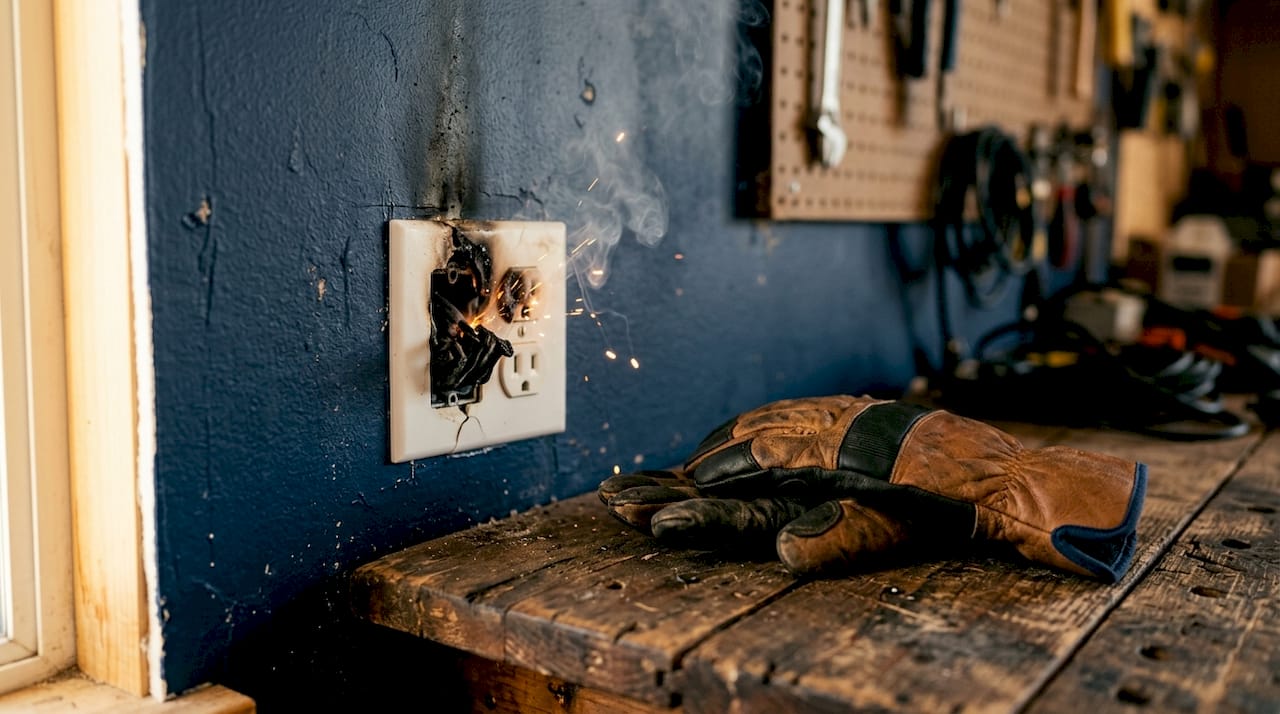
3. Burning smell with no visible source
A burning smell without an obvious cause often means insulation around wiring is overheating. These signs are rarely isolated and typically point to a deeper wiring problem behind walls or inside the panel. Shut off the circuit you suspect and call for emergency electrical services immediately. Waiting even a few hours increases the risk of a hidden fire spreading inside wall cavities.
4. Repeatedly tripping circuit breakers
A breaker that trips once after an obvious overload is doing its job. A breaker that trips repeatedly without a clear cause signals an overloaded circuit, a short circuit, or a failing breaker itself. Resetting the breaker repeatedly delays proper diagnosis and extends your risk exposure. A licensed electrician uses diagnostic tools to identify the root cause, which is something a reset cannot accomplish.
Pro Tip: Document every breaker trip with the date, time, and which appliances were running. This log gives your electrician a faster path to diagnosis and reduces your service call time.
5. Warm or discolored outlet and switch plates
Outlet covers and switch plates should always be at room temperature. A warm or discolored plate means the wiring behind it is carrying more current than it should, or a connection has loosened and is arcing. Flickering lights in multiple areas often accompany this symptom and point to a loose neutral connection causing voltage spikes. Left unaddressed, this damages sensitive electronics and raises fire risk significantly.
6. Buzzing or crackling sounds from walls or panels
Electrical systems operate silently. Any buzzing, crackling, or humming from an outlet, switch, or panel is the sound of electricity jumping gaps it should not be crossing. This is an active arc fault until proven otherwise. Turn off the affected circuit at the panel and contact a licensed electrician before restoring power to that area.
7. Flickering or dimming lights across multiple rooms
A single flickering bulb usually means a loose bulb or a failing fixture. Flickering across multiple rooms or on multiple circuits points to a loose main neutral connection or a failing utility connection at the service entrance. This is a systemic issue, not a cosmetic one. Voltage irregularities from a loose neutral can destroy appliances and increase fire risk throughout the home.
8. Outlets or switches that deliver shocks
Any outlet or switch that delivers even a mild shock when touched is unsafe to use. Shocks indicate a grounding failure or a live wire making contact with a surface it should not touch. Stop using the outlet, label it clearly, and schedule an urgent repair. This is not a symptom that resolves on its own.
9. Water contact with electrical components
Water and electricity in contact create an immediate electrocution and fire hazard. Flooded panels, outlets near leaks, or any electrical component that has gotten wet requires a licensed electrician before power is restored to that area. GFCI (ground fault circuit interrupter) protection is required by the National Electrical Code in kitchens, bathrooms, and outdoor areas precisely because water contact is predictable in those locations.
10. Dead outlets in multiple locations
One dead outlet might be a tripped GFCI. Multiple dead outlets across different rooms often indicate a wiring fault, a failed circuit, or a panel problem. Property managers especially should treat widespread outlet failures as a priority repair, since tenants may use extension cords as workarounds, which creates additional fire hazards.
11. Overloaded circuits with no room to expand
An electrical panel running at capacity with no available breaker slots is a ticking problem for any homeowner adding appliances, an EV charger, or a home office. Overloaded panels cause chronic breaker trips and increase the risk of overheating. A licensed electrician can assess whether a panel upgrade or a subpanel addition is the right fix.
Why delaying these repairs increases costs and risk
Property owners who rely only on reactive repairs pay 3–5 times more long term than those with structured, proactive maintenance plans. That cost multiplier reflects the difference between catching a loose connection during a routine inspection versus rewiring a wall after a fire. Delayed repairs also create secondary damage: appliance burnout from voltage spikes, water damage from electrical fires, and insurance complications when claims involve known and unaddressed hazards.
“Homeowners often mistakenly believe electrical faults will resolve themselves. Early symptoms are systemic warnings that require professional repair, not watchful waiting. The longer the delay, the more of the system gets involved.”
Insurance carriers increasingly scrutinize electrical fire claims for evidence of prior symptoms. A homeowner who reported flickering lights to a contractor but did not act may face a reduced or denied claim. Proactive repair protects both the structure and the policy.
How to prevent urgent repairs with a maintenance checklist
A proactive electrical maintenance checklist assigns inspection tasks by frequency and creates a documented record that protects homeowners and property managers alike. Successful electrical maintenance follows a 4-tier schedule that separates daily observations from monthly checks, annual panel tests, and multi-year equipment reviews.
Monthly checks:
- Test all GFCI outlets by pressing the test and reset buttons
- Check outlet covers and switch plates for warmth or discoloration
- Listen for buzzing near the panel or any outlets
- Confirm all exterior lighting and weatherproof outlets are intact
Annual checks:
- Have a licensed electrician inspect the panel for corrosion, loose connections, and breaker condition
- Test smoke detectors and replace batteries
- Inspect wiring in accessible areas such as attics, crawl spaces, and garages
- Review the electrical installation safety checklist for your property type
Documentation matters as much as the inspections themselves. A written log of every inspection, repair, and symptom creates a liability record that supports insurance claims and satisfies code compliance reviews. Property managers with multiple units benefit most from a standardized log format applied consistently across all properties.
Pro Tip: Keep a dedicated folder, physical or digital, for each property with inspection dates, contractor invoices, and any symptom notes. This record reduces diagnostic time on every future service call and strengthens your position with insurers.
When and how to contact a licensed electrician
Call immediately when you notice sparks, burning smells, shocks, or a breaker that will not stay reset. A direct phone call to a licensed electrician allows for real-time triage, including guidance on whether to shut off the main breaker or evacuate before the technician arrives. Online contact forms do not provide this real-time guidance. For life-safety symptoms, a phone call is the only appropriate first step.
Before the electrician arrives, take these steps:
- Shut off the affected circuit at the panel if you can do so safely
- Note the exact symptoms, when they started, and what was running at the time
- Clear access to the panel, outlets, and any affected areas
- Do not use the affected outlet, switch, or circuit until the repair is complete
DIY repairs on complex electrical components void warranties and violate building codes. Licensed electricians carry the credentials, tools, and insurance to perform repairs that meet local code requirements. Unlicensed work creates liability for property owners and can trigger failed inspections during home sales. The hire licensed electrician guide from Greg Beverly Services outlines exactly what credentials and questions to verify before any work begins.
Greg Beverly Services: fast, reliable electrical repairs
Greg Beverly Services brings over 40 years of licensed electrical experience to homeowners and property managers across the Grand Strand area. Whether you need an urgent repair addressed today or a scheduled maintenance visit to prevent the next emergency, the team delivers transparent communication and workmanship built to local safety codes.

Greg Beverly Services handles residential electrical repairs from panel diagnostics and outlet replacements to full rewiring and generator installations. Property managers benefit from the same structured maintenance approach that prevents reactive repair costs from compounding. Call Greg Beverly Services directly for any symptom on this list. The team provides phone triage for emergencies and scheduled visits for preventive care.
Key Takeaways
Delaying urgent electrical repairs multiplies costs, increases fire risk, and creates insurance liability. The most effective approach to electrical safety is combining immediate action on warning signs with a documented, scheduled maintenance program.
| Point | Details |
|---|---|
| Act on warning signs immediately | Sparks, burning smells, shocks, and repeated breaker trips require same-day professional attention. |
| Proactive maintenance cuts long-term costs | Reactive-only repairs cost 3–5 times more than structured maintenance plans over time. |
| Phone calls beat online forms in emergencies | Direct calls allow real-time triage and guidance on shutting off power or evacuating safely. |
| Document every inspection and symptom | Written records protect against insurance disputes and speed up every future service call. |
| Licensed repairs protect code compliance | DIY electrical work voids warranties, violates building codes, and creates liability for property owners. |
FAQ
What repairs should never be delayed in a home?
Repairs involving sparks, burning smells, warm outlets, repeated breaker trips, shocks, or water contact with electrical components should never be delayed. These symptoms indicate active fire or shock hazards that worsen with every hour of inaction.
How do I know if an electrical issue is an emergency?
Any symptom involving heat, smell, sound, sparks, shocks, water, or repeated circuit interruptions qualifies as an emergency. Call a licensed electrician immediately rather than waiting to see if the symptom resolves.
Is it safe to reset a tripping breaker myself?
Resetting a breaker once after an obvious overload is safe. Repeatedly resetting a breaker that keeps tripping delays proper diagnosis and extends your risk exposure. A licensed electrician must identify the root cause before the circuit is used again.
How often should a homeowner schedule electrical inspections?
Monthly GFCI tests and outlet checks are the minimum for any homeowner. A licensed electrician should inspect the panel and accessible wiring annually, with additional inspections after any major appliance addition, renovation, or storm damage.
Can delaying electrical repairs affect my homeowner’s insurance?
Yes. Insurance carriers can reduce or deny claims when evidence shows a homeowner was aware of electrical symptoms and did not act. Documented repairs and inspections create a record that supports claims and demonstrates due diligence.