
Residential electrical permits are legal authorizations required by local building departments before starting specific electrical work in a home, and understanding the types of residential electrical permits you need protects you from failed inspections, voided insurance, and costly rework. Each permit type corresponds to a specific scope of work, from adding a new circuit to installing a generator transfer switch. Permit fees for residential projects typically range from $50 to $400, with approvals taking one to three weeks. The National Electrical Code (NEC) sets the baseline standards, but your local Authority Having Jurisdiction (AHJ) determines exactly which projects require a permit and who can pull one.
1. Types of residential electrical permits you need to know
The seven permit categories below cover the vast majority of residential electrical projects. Knowing which one applies to your job before you start saves time, money, and legal headaches.
New circuit permits cover any project that adds wiring to areas not previously served, including new outlets, lighting circuits, or dedicated appliance circuits. This is one of the most common residential wiring permits pulled by both homeowners and licensed electricians.
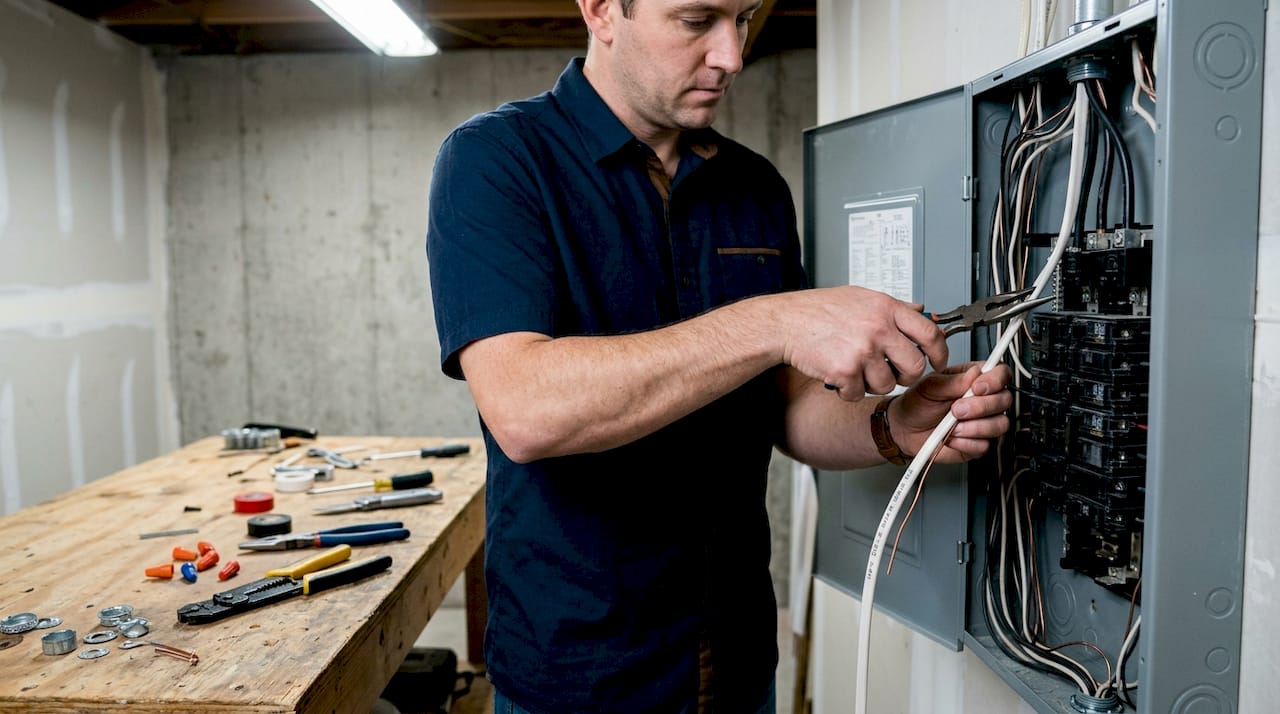
Service panel upgrade permits are required when you increase your home’s electrical capacity, such as moving from a 100-amp to a 200-amp service. These projects fall under NEC Article 230 and almost always require coordination with your utility company before power can be restored after inspection.
Subpanel installation permits apply when you add a secondary distribution panel, typically for a detached garage, accessory dwelling unit (ADU), or a large addition. The subpanel feeds off the main panel and must be sized and wired to code.
EV charger installation permits are now among the most frequently requested residential electrical permit types. A Level 2 charger runs on a 240V dedicated circuit and falls under NEC Article 625. Most jurisdictions require both a permit and a final inspection before the charger can be energized.
Generator and transfer switch permits cover standby and portable generator hookups. NEC Article 702 governs optional standby systems, and a transfer switch is mandatory to prevent back-feeding power onto utility lines. This is a life-safety requirement, not a formality.
Pool, hot tub, and spa electrical permits are among the most strictly enforced. NEC Article 680 sets bonding, grounding, and GFCI requirements for all water-feature installations. Inspectors look closely at these projects because the consequences of a wiring error near water are severe.
Rewiring permits apply to partial or whole-house electrical system upgrades, often triggered by aging knob-and-tube or aluminum wiring. These projects require detailed plan reviews in many jurisdictions and multiple inspection stages.
Pro Tip: Pull the permit before any work begins. Inspectors in most jurisdictions will require you to open finished walls if work was completed without a permit, which costs far more than the permit fee itself.
2. Which projects are typically exempt from permits
Not every electrical task triggers a permit requirement. Like-for-like replacements such as swapping an outlet, switch, or light fixture in the same location without adding new wiring generally do not require a permit. The key phrase is “same location, same function, no new wiring.”
Low-voltage wiring under 30 volts is generally exempt from electrical permit requirements under NEC Article 725. This includes doorbell wiring, thermostat cabling, ethernet runs, and most landscape lighting. Thermostats and ethernet cables classified as NEC Class 2 and Class 3 circuits fall squarely in this exemption category.
Replacing a breaker with the same amperage and type in an existing panel is typically exempt as well. Minor repairs such as tightening a loose connection or fixing a broken wire inside an accessible junction box also fall outside permit territory in most jurisdictions.
The critical caveat: exemptions are not universal. A like-for-like fixture swap can still trigger a permit if the existing electrical box lacks required grounding or arc-fault circuit interrupter (AFCI) protection, because the replacement work then requires a code upgrade. Local rules vary enough that the safest assumption, as Jaspector notes, is that any change to electrical capacity or grounding requires a permit until your AHJ confirms otherwise.
Pro Tip: Call your local building department before starting any project you think might be exempt. A two-minute phone call is faster and cheaper than a stop-work order.
3. How permit requirements vary by location and who can pull them
Permit rules are not uniform across the country, and the differences matter practically. Here is how the main variables break down.
-
Homeowner vs. licensed electrician pull rights. In many states, homeowners can pull permits for their primary residence, but they must meet the same inspection standards as licensed professionals. Some states restrict this right entirely for high-voltage or high-complexity work.
-
Affidavit requirements. When homeowners are allowed to pull permits, most jurisdictions require a signed affidavit accepting full legal liability. Failure to comply can jeopardize insurance claims in the event of fire or property damage. This is not a technicality. It is a real financial risk.
-
City and county restrictions. Some municipalities, particularly larger cities, restrict permit-pulling to licensed electricians for any project involving the service entrance or panel. PermitFlow confirms that local licensing requirements vary significantly, and contractors should verify who can legally pull permits before bidding a job.
-
Utility coordination for service upgrades. Panel upgrades require a separate process beyond the building permit. Utility reconnection after a service upgrade inspection is handled by the utility company, not the building department. Skipping this coordination step delays power restoration even when the inspection passes.
-
Multiple permits for remodeling projects. Electrical permits are distinct from building, plumbing, and mechanical permits. A kitchen remodel may require all three, each reviewed and inspected independently. Understanding the MEP permit set helps contractors sequence their applications correctly and avoid delays.
4. Comparing common permits by scope, cost, and approval time
The table below maps the most common residential electrical permit types to their typical project scope, fee range, and approval timeline. These figures reflect national averages; your local AHJ may differ.
| Permit type | Typical project scope | Fee range | Approval time |
|---|---|---|---|
| New circuit permit | Adding outlets, lighting, or dedicated circuits | $50 to $150 | 1 to 2 weeks |
| Service panel upgrade | 100A to 200A or 200A to 400A service change | $150 to $400 | 2 to 3 weeks |
| Subpanel installation | Detached garage, ADU, or addition feed | $100 to $300 | 1 to 3 weeks |
| EV charger installation | Level 2, 240V dedicated circuit | $75 to $200 | 1 to 2 weeks |
| Generator transfer switch | Standby or manual transfer switch hookup | $100 to $300 | 1 to 3 weeks |
| Pool or spa electrical | Bonding, GFCI, and lighting for water features | $150 to $400 | 2 to 3 weeks |
| Whole-house rewiring | Full system replacement or aluminum wire remediation | $200 to $400 | 2 to 3 weeks |
Projects requiring plan review, such as whole-house rewiring or new service installations, sit at the longer end of the approval window. Over-the-counter permits, like a single new circuit, are often issued the same day in smaller jurisdictions. Electrical permit fees scale with the complexity and size of the work, not just the material cost.
Pro Tip: Submit complete documentation on your first application. Missing load calculations or wiring diagrams are the single most common reason for permit delays. Ask your building department for a checklist before you apply.
Key takeaways
Residential electrical permits are non-negotiable for major work, and knowing which type applies to your project keeps you compliant, insured, and inspection-ready.
| Point | Details |
|---|---|
| Seven core permit types | New circuits, panel upgrades, subpanels, EV chargers, generators, pools, and rewiring each require a separate permit. |
| Exemptions are narrow | Like-for-like replacements and low-voltage wiring under 30V are typically exempt, but local rules can override this. |
| Who pulls the permit matters | Homeowners can pull permits in many states but must sign liability affidavits and meet professional inspection standards. |
| Fees and timelines are predictable | Most residential electrical permits cost $50 to $400 and are approved within one to three weeks. |
| Utility coordination is separate | Panel upgrade permits and utility reconnection are two distinct processes that must both be completed before power is restored. |
What I’ve learned from watching permit mistakes play out
The most expensive permit mistake I see repeatedly is the assumption that a “small” project does not need one. A homeowner adds two outlets in a finished basement, skips the permit, and sells the house three years later. The buyer’s inspector flags the unpermitted work. The deal falls through or the seller pays to open walls and get it inspected retroactively. That outcome costs ten times what the original permit would have.
The second pattern is contractors who skip utility notification on panel upgrades. The inspection passes, the homeowner expects power back that afternoon, and then they wait two days because the utility was never contacted. Utility coordination is a separate process from the building department approval, and it needs to start before the inspection, not after.
I also think the homeowner affidavit requirement is underestimated. Signing one means your insurance carrier may deny a fire claim if the work is later found to be non-compliant. That is a significant liability that most homeowners do not fully read before signing. If you are not confident in your electrical knowledge, hiring a licensed electrician to pull the permit is not just safer. It is financially smarter.
The permit process exists because electrical failures cause house fires. Inspections catch real errors. The paperwork is worth it.
— SEO
How Gregbeverlyservices handles permits and compliant installations

Gregbeverlyservices has served the Grand Strand area for over 40 years, and permit compliance is built into every project from the first consultation. Whether you need a panel upgrade to meet current NEC standards, a permitted EV charger installation, or a generator transfer switch that passes inspection the first time, the team handles the permit application, coordinates with utilities, and schedules inspections on your behalf. Gregbeverlyservices also offers residential electrical services covering new circuits, rewiring, and specialty installations, all backed by transparent communication and code-compliant workmanship. Contact Gregbeverlyservices for a consultation and get your project permitted and completed correctly.
FAQ
What projects always require a residential electrical permit?
Permits are mandatory for panel upgrades, whole-house rewiring, Level 2 EV charger installations, generator transfer switches, new circuit runs, and pool or spa electrical work. These projects fall under NEC Articles 230, 625, 680, 690, and 702.
Can a homeowner pull their own electrical permit?
In many states, homeowners can pull permits for their primary residence, but they must sign a liability affidavit and pass the same inspections required of licensed electricians. Some jurisdictions restrict this right for high-voltage or service-entrance work.
How long does it take to get a residential electrical permit approved?
Most standard residential electrical permits are approved within one to three weeks. Simple permits like a single new circuit may be issued over the counter the same day in smaller jurisdictions.
Do low-voltage projects like ethernet or doorbell wiring need a permit?
Low-voltage wiring under 30 volts, including ethernet, thermostat cables, and doorbell wiring, is generally exempt from permit requirements under NEC Article 725. Always confirm with your local AHJ, as local rules can vary.
What happens if you do electrical work without a permit?
Unpermitted electrical work can result in stop-work orders, fines, required demolition of finished work for inspection, and denied insurance claims. It also creates disclosure obligations and complications when selling the home.