
A licensed electrician is a state-authorized professional trained to install, maintain, and repair electrical systems in compliance with building codes and safety standards. Understanding the role of a licensed electrician is not just useful knowledge. It is the foundation for making safe, legally sound decisions about your home or property’s electrical work. Whether you manage a single-family home or a commercial building in the Grand Strand area, knowing what these professionals are legally qualified to do protects your investment and your occupants.
What does a licensed electrician actually do?
A licensed electrician performs the full range of electrical work that keeps a building safe and functional, from wiring new construction to diagnosing faults in aging systems. Licensed electricians complete state-approved licensing programs and exams before they can legally perform this work independently. That legal authorization is what separates them from uncertified workers who may have hands-on skills but no formal accountability.
The scope of licensed electrician duties covers far more than flipping breakers or swapping outlets. A licensed electrician reads blueprints, plans circuit layouts, installs service panels, runs conduit, and connects equipment to power sources. They also verify that every installation meets the National Electrical Code (NEC) and local amendments before signing off on the work.
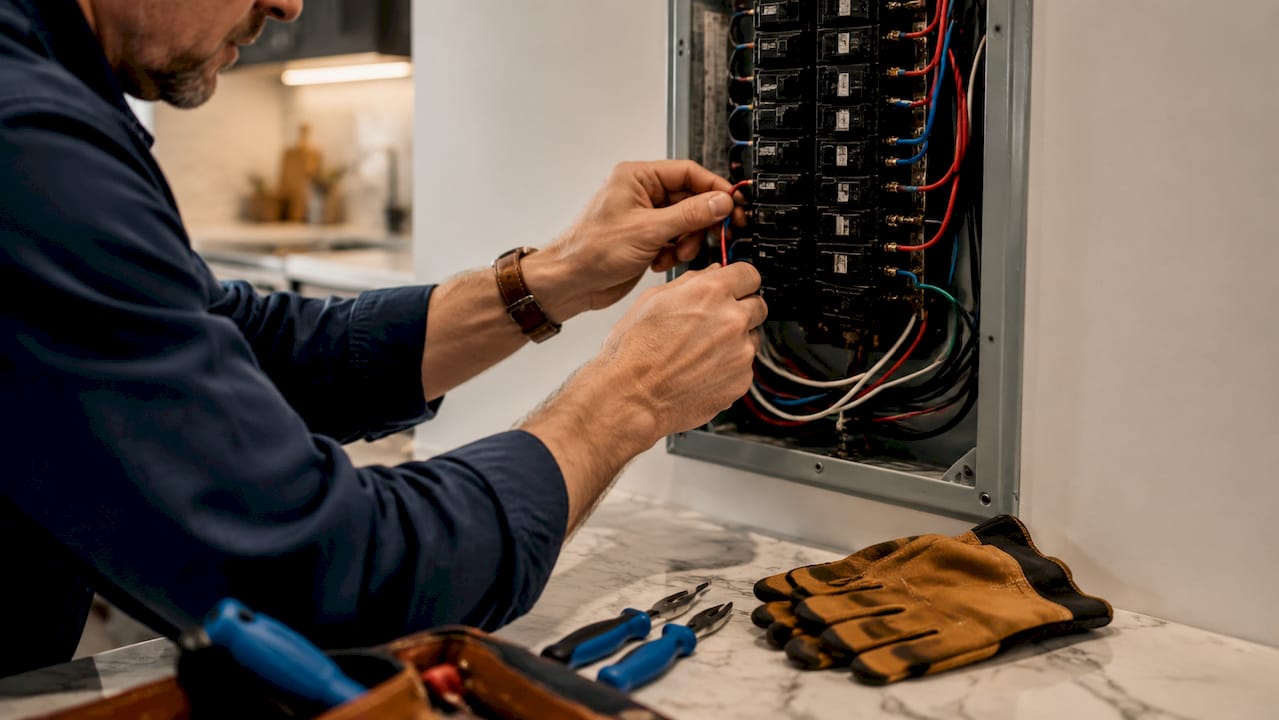
For homeowners and property managers, this matters because electrical failures are one of the leading causes of residential fires in the United States. Hiring someone without a license means hiring someone without legal accountability for the outcome.
What qualifications and licensing requirements define a licensed electrician?
Becoming a licensed electrician requires completing a structured apprenticeship and passing state-administered exams. Most states require electricians to hold a journeyman license after completing their apprenticeship before they can work independently on electrical systems.
The two most recognized license levels are:
- Journeyman electrician: Has completed an apprenticeship (typically 4 to 5 years) and passed a state licensing exam. Can perform electrical work under general supervision or independently, depending on state rules.
- Master electrician: Has additional years of experience beyond journeyman status and has passed a more advanced exam. A master electrician can pull permits, design electrical systems, and supervise other electricians.
- Electrical contractor license: Required for companies or individuals who contract electrical work. In North Carolina, for example, electrical contractors must hold a license with a qualified individual supervising all wiring and installation at each business location.
Licensing is not the same as certification. Licensing authorizes work legally while certification is optional and specialty-focused, covering areas like solar installation or fire alarm systems. A certified electrician without a license cannot legally perform independent electrical work in most states. This distinction trips up many homeowners who assume any credential is sufficient.
Pro Tip: When hiring an electrician, ask for both the individual’s journeyman or master license number and the company’s contractor license number. Verifying both protects you if something goes wrong during or after the job.
What are the daily duties and tasks of a licensed electrician?
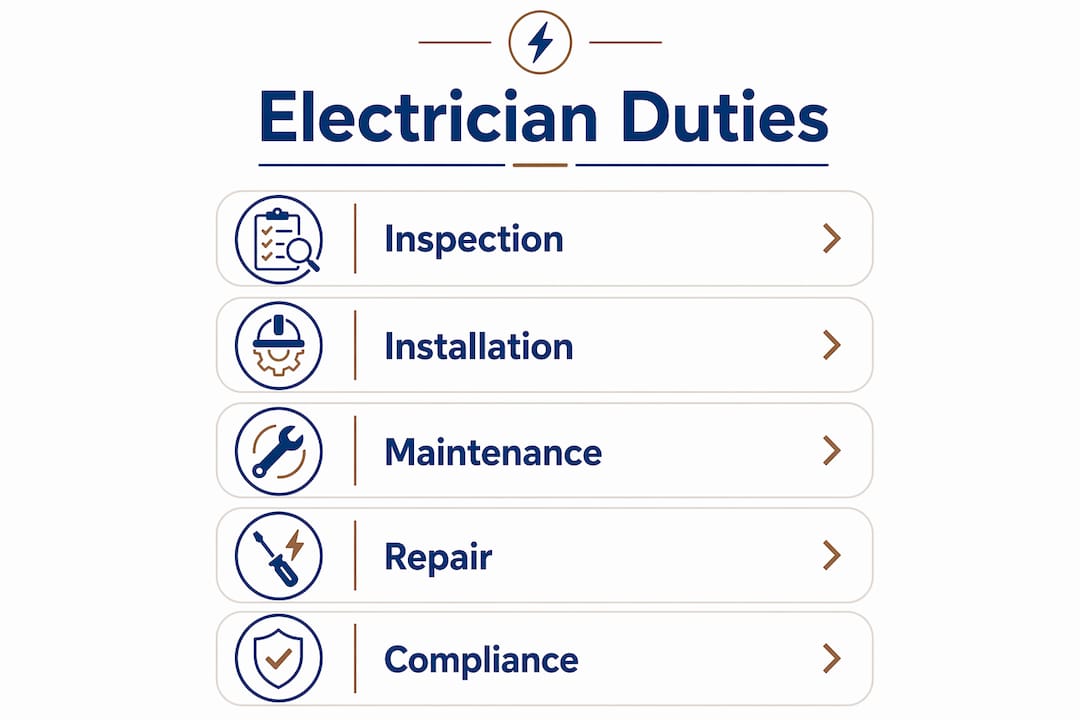
A licensed electrician’s daily responsibilities include installing or replacing wiring, outlets, switches, and breakers, plus inspecting and troubleshooting electrical systems. For homeowners, this translates into a broad set of services that cover nearly every electrical need a property generates.
Core licensed electrician tasks include:
- Wiring and rewiring: Running new circuits for additions, renovations, or appliance upgrades like EV chargers and whole-home generators
- Panel work: Installing, upgrading, or replacing electrical panels to handle increased load demands
- Outlet and switch installation: Adding or relocating receptacles, GFCI outlets, and smart switches
- Lighting installation: Recessed lighting, exterior fixtures, ceiling fans, and landscape lighting
- Fault diagnosis: Tracing circuits and verifying entire system operation using proper test equipment to find problems that visual inspection alone cannot catch
- Inspection preparation: Testing systems and producing documentation required for permit inspections
What separates a licensed electrician from a handyman doing electrical work is the diagnostic depth. Licensed electricians are skilled at fault-finding beyond obvious repairs, tracing circuits and verifying operations with proper test equipment. A tripped breaker might look like a simple reset job. A licensed electrician checks whether the circuit is overloaded, whether the wiring is degraded, and whether the panel itself needs attention.
Pro Tip: Before scheduling an electrician for a single repair, ask them to do a walkthrough of your panel and visible wiring. Many serious issues are caught during routine visits, not dedicated inspections.
For residential electrical services, the scope of work spans everything from new construction wiring to upgrading older systems that no longer meet current code requirements.
What are the legal, safety, and compliance responsibilities of a licensed electrician?
Licensed electricians carry personal legal responsibility for the safety and compliance of their work. This is not a formality. Signing installation certificates are formal legal declarations, meaning an electrician who signs off on faulty work can face legal liability for injuries, property damage, or code violations that result.
“Licensing translates training into legal accountability, not just skill demonstration.” This distinction is why property managers and homeowners should never treat a license as a box to check. It is the mechanism that creates enforceable responsibility.
Licensed electricians comply with the NEC, state amendments, and local building codes on every job. They use testing instruments such as multimeters, insulation resistance testers, and circuit analyzers to verify safe operation before closing walls or handing over a completed system. Testing and verification documentation must be produced to pass inspections and maintain safety. A quick visual check without proper testing misses critical safety deliverables.
Here is a breakdown of the key compliance responsibilities licensed electricians carry:
| Responsibility | What it means for your property |
|---|---|
| NEC and local code compliance | All work meets minimum safety standards enforced by local inspectors |
| Permit pulling and inspection | Licensed electricians can legally pull permits and have work inspected |
| Testing and documentation | Written records of test results support inspections and legal defense |
| Personal legal liability | The electrician is accountable if signed-off work causes harm or fails inspection |
| Supervision of unlicensed workers | Master electricians and contractors are responsible for work done under their license |
Personal legal liability for electricians through certification documents reinforces why using licensed professionals matters for property management. If an unlicensed worker performs electrical work and a fire results, your homeowner’s insurance may deny the claim entirely.
How to hire a licensed electrician the right way
Hiring a licensed electrician starts with verification, not price comparison. The lowest bid means nothing if the person performing the work is not legally authorized to do it.
Follow these steps to hire correctly:
- Verify the individual license. Ask for the electrician’s journeyman or master license number and confirm it with your state licensing board. Most states offer online lookup tools.
- Verify the contractor license. The company performing the work needs its own license. Different license levels affect who can pull permits or supervise work, so confirming both the individual and company credentials is non-negotiable for property managers.
- Get a written scope of work. A verbal agreement is not enough. A written estimate should specify what work will be done, what materials will be used, and what permits will be pulled.
- Confirm permit requirements. Any significant electrical work requires a permit. If an electrician tells you permits are unnecessary for a panel upgrade or new circuit installation, that is a red flag.
- Request documentation after completion. Electricians’ deliverables include detailed documentation and testing results, not just installed hardware. These records are critical for inspections and for defending your property’s safety history.
- Check insurance coverage. A licensed electrician should carry general liability insurance and workers’ compensation. This protects you if someone is injured on your property during the job.
For property managers overseeing multiple units or commercial spaces, building a relationship with a single licensed electrical contractor simplifies compliance tracking and reduces the risk of inconsistent workmanship across properties. Commercial electrical services from a contractor with a proven track record in your area are worth the investment in consistency alone.
Key takeaways
A licensed electrician is the only professional legally authorized to perform, document, and take personal liability for electrical work that meets code and passes inspection.
| Point | Details |
|---|---|
| Licensing means legal accountability | A license is not just a credential. It creates enforceable personal liability for the electrician’s work. |
| Journeyman vs. master license matters | Master electricians can pull permits and supervise; journeymen work independently within state rules. |
| Duties go beyond installation | Licensed electricians test, document, and certify work. Documentation is as important as the physical installation. |
| Licensing and certification are different | Certification is specialty-focused and optional. Only a license authorizes independent legal electrical work. |
| Verification protects homeowners | Confirm both the individual’s license and the company’s contractor license before any work begins. |
Why I think most homeowners underestimate what a licensed electrician actually delivers
After years of writing about skilled trades and property management, the pattern I keep seeing is this: homeowners focus on the visible output of electrical work and miss the invisible deliverable entirely. They see a new outlet or a replaced breaker and think the job is done. The licensed electrician has also tested the circuit, verified the load, documented the results, and taken legal responsibility for the outcome. That accountability layer is what you are actually paying for.
The confusion between licensed and certified electricians is a real problem. I have spoken with property managers who hired someone with an impressive-sounding certification for panel work, only to discover the work was not permitted and failed inspection. The certification meant the person had completed a course. The license would have meant they were legally authorized to do the work and personally liable if it went wrong.
The other thing worth saying plainly: electrical faults are not always obvious. Diagnosing electrical faults often requires tracing circuits and verifying entire system operation, which makes unlicensed quick fixes risky despite appearances. A licensed electrician brings test equipment and a trained eye to problems that look simple on the surface. That depth of diagnosis is not something you can replicate with a YouTube tutorial and a voltage tester.
— SEO
Trusted licensed electrical services from Gregbeverlyservices
Gregbeverlyservices brings over 40 years of licensed electrical experience to homeowners and property managers across the Grand Strand area. Every job is performed by licensed professionals who pull permits, document their work, and stand behind the results.

Whether you need EV charger installation, a generator installation to protect your home during outages, or a full panel upgrade to bring your system up to current code, Gregbeverlyservices delivers transparent estimates, clean workmanship, and inspection-ready results. Contact the team today to schedule a consultation and get a written scope of work before any project begins.
FAQ
What is the difference between a licensed and certified electrician?
A licensed electrician is legally authorized to perform independent electrical work in their state, while a certified electrician holds a specialty credential that is optional and does not grant legal authorization to work independently.
Can a licensed electrician pull permits?
Master electricians and licensed electrical contractors can pull permits for electrical work. Journeyman electricians typically work under a contractor’s license when permits are required, depending on state rules.
Why does hiring a licensed electrician matter for insurance?
If unlicensed electrical work causes a fire or injury, homeowner’s insurance policies commonly deny claims because the work was not performed by a legally authorized professional. A licensed electrician’s personal legal liability and documentation protect both the property and the owner.
What should I ask before hiring an electrician?
Ask for the individual’s license number, the company’s contractor license number, proof of insurance, and a written scope of work that includes permit details. Verifying both individual and company licenses is the most important step before any work begins.
What documentation should a licensed electrician provide after a job?
A licensed electrician should provide testing results, inspection certificates, and a record of all work completed. These detailed documentation and testing results are critical for passing inspections and maintaining a defensible safety record for your property.