
Commercial electrical maintenance is the planned, ongoing inspection, testing, and servicing of a building’s electrical systems to prevent failures, reduce safety hazards, and maintain code compliance. Unlike reactive repairs, this scheduled maintenance program covers everything from panel checks and wiring assessments to backup generator testing and infrared thermography scans. For business owners and facility managers, understanding what commercial electrical maintenance involves is the difference between controlling your operational risk and reacting to expensive emergencies. This guide breaks down every core component, the compliance standards that shape modern programs, and what you should expect to pay.
What does commercial electrical maintenance include?
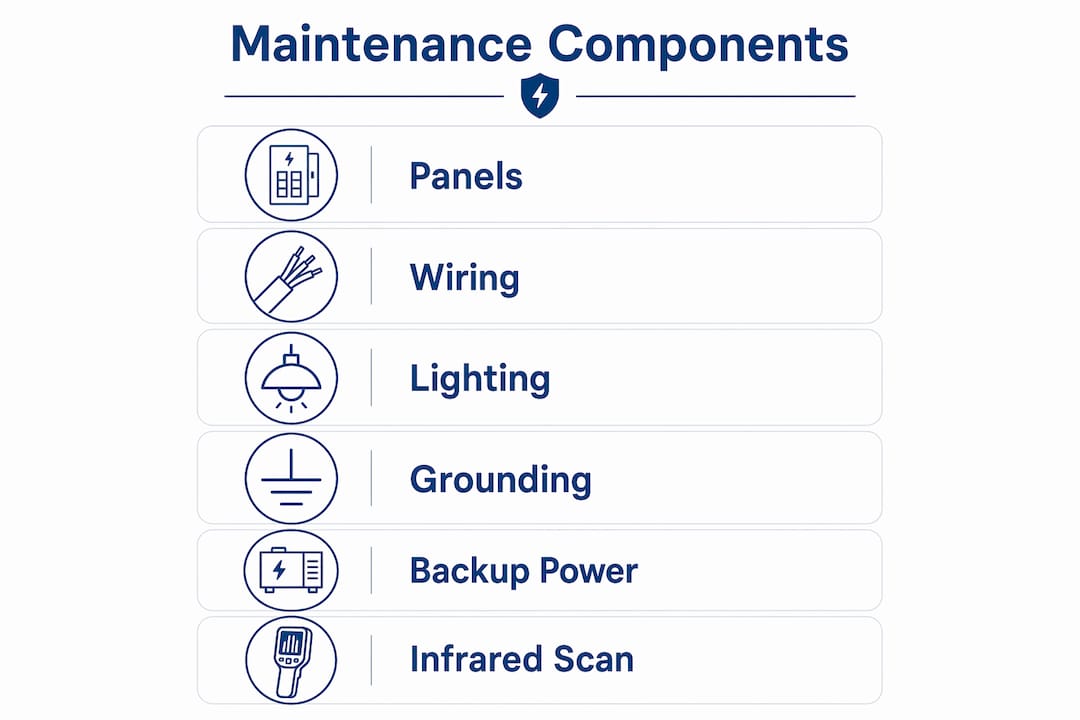
Commercial electrical maintenance covers six primary system areas, each requiring its own inspection and servicing tasks. A well-designed program addresses all of them on a defined schedule, not just when something breaks.
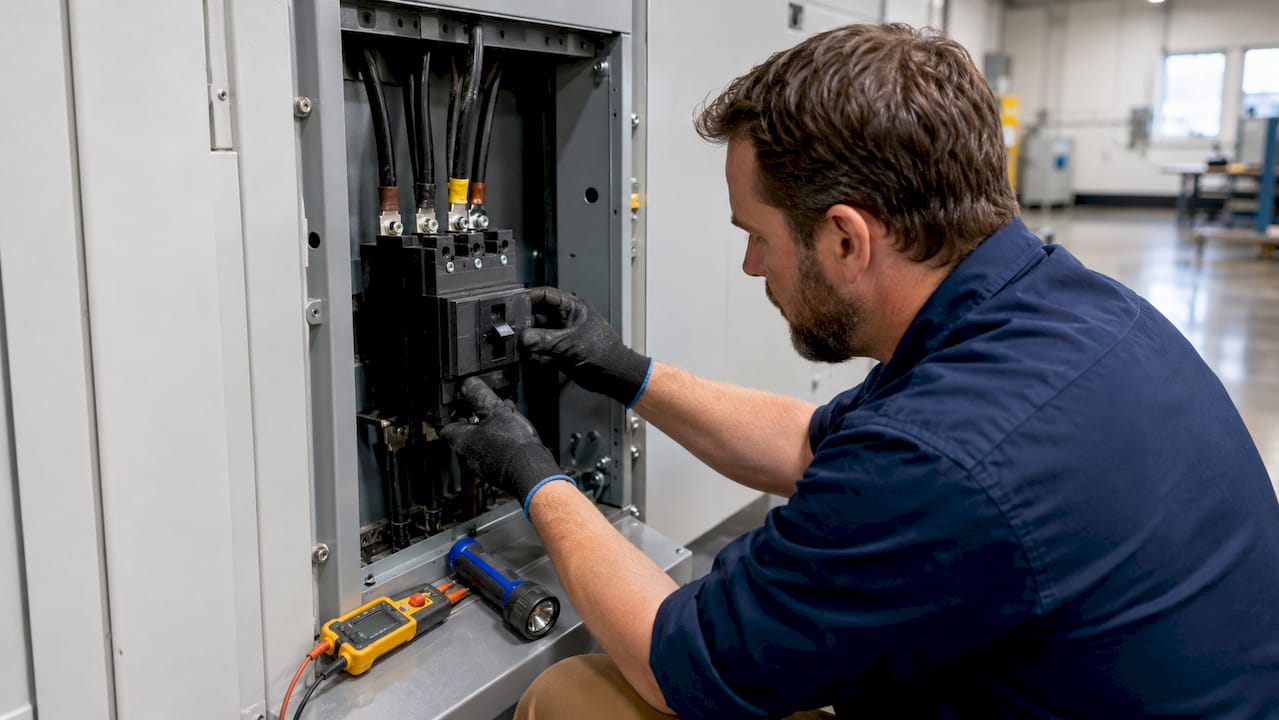
Electrical panels and circuit breakers
The main service panel is the nerve center of any commercial building. Technicians inspect breakers for signs of overheating, corrosion, or loose connections, then test protective devices to confirm they trip correctly under fault conditions. Panels that go unchecked for years are among the leading causes of commercial electrical fires.
Wiring integrity and connections
Wiring checks cover insulation condition, connection tightness, and signs of physical damage throughout the building. Loose connections generate heat over time. That heat accelerates insulation breakdown and creates fire risk long before any visible symptom appears.
Lighting systems, including emergency and exit lighting
Lighting maintenance goes beyond replacing burned-out bulbs. Technicians verify that emergency and exit lighting activates correctly during a power loss, which is a life safety requirement under most building codes. Battery backup units in emergency fixtures degrade silently and fail exactly when they are needed most.
Grounding, bonding, and surge protection
Grounding systems protect both people and equipment. Inspections confirm that grounding conductors are intact, bonding connections are secure, and surge protection devices are still functional. A failed surge protector offers zero protection while appearing fully operational.
Backup power systems
Generator preventive maintenance includes no-load starts, load bank testing, fuel system checks, cooling system inspections, and transfer switch operation verification. Skipping these tests means your backup power system may fail during the outage it was installed to handle.
Pro Tip: Schedule load bank testing for your generator at least once a year. A generator that starts under no load can still fail under full building load, and you will not know until the power goes out.
Infrared thermography
Infrared thermography scans electrical panels, switchgear, and connections using thermal imaging cameras to detect hot spots invisible to the naked eye. Annual IR programs typically cost $2,000 to $8,000 depending on facility size and scope. That cost is a fraction of what a single electrical fire or unplanned equipment failure costs in repairs, downtime, and lost revenue.
How does NFPA 70B shape your maintenance program?
NFPA 70B is the recognized industry standard for electrical equipment maintenance in commercial and industrial facilities. The 2023 edition shifted from advisory guidance to mandatory language in many jurisdictions, and 2026 compliance expectations now treat a documented Electrical Maintenance Program (EMP) as a baseline requirement, not a best practice.
A compliant EMP must define four things clearly:
- Scope. Which equipment is covered, where it is located, and what systems fall under the program.
- Personnel qualifications. Who is authorized to perform inspections, testing, and corrective work, including licensing and training requirements.
- Inspection and testing methods. The specific procedures used for each equipment type, referenced to standards like NFPA 70B or NETA MTS.
- Intervals and corrective action documentation. How often each task occurs, the rationale for that frequency, and how findings are recorded and resolved.
NFPA 70B explicitly rejects purely calendar-based scheduling without documented justification. Power circuit breakers, for example, may have inspection intervals ranging from 12 to 60 months depending on their condition and criticality. A fixed annual schedule applied to every breaker regardless of condition wastes resources on low-risk equipment while potentially under-serving high-risk assets.
Facilities must inventory and categorize all electrical equipment, establish justified inspection intervals, perform testing and corrective tasks, and keep detailed records. That documentation serves three purposes: it demonstrates compliance during inspections, supports insurance claims after incidents, and creates a trend record that reveals deteriorating equipment before it fails.
OSHA requirements layer on top of NFPA 70B. Lockout/tagout procedures, arc flash hazard assessments, and personal protective equipment requirements all connect directly to how maintenance tasks are performed and documented.
What are the benefits and costs of commercial electrical upkeep?
Structured maintenance delivers measurable returns across four areas: safety, uptime, energy efficiency, and cost control.
| Benefit area | What maintenance delivers |
|---|---|
| Safety | Reduces fire and shock hazards by catching deteriorating wiring, failed grounding, and overloaded circuits early |
| Operational uptime | Prevents unplanned outages by identifying failing components before they cause shutdowns |
| Energy efficiency | Keeps lighting systems, connections, and load distribution running at designed efficiency |
| Cost control | Preventive service costs a fraction of emergency repairs and equipment replacement |
The cost comparison between preventive maintenance and emergency repairs is not close. An unplanned electrical failure in a commercial facility can mean lost production, spoiled inventory, hotel costs for displaced tenants, and emergency electrician rates that run two to three times standard billing. Structured maintenance programs reduce emergency repair costs and extend equipment life, which directly improves your capital planning.
Infrared thermography offers one of the clearest ROI cases in commercial electrical maintenance. A scan that costs $3,000 and catches a failing bus connection in a main switchgear panel avoids a repair that could easily exceed $50,000, plus days of downtime. The math is straightforward.
Pro Tip: Ask your electrical contractor to provide a written corrective action report after every infrared scan. A thermal image without a severity rating and a recommended repair timeline is not a maintenance record. It is a photograph.
Energy efficiency gains are real but often underestimated. Loose connections and aging ballasts in lighting systems draw more current than they should. Correcting these issues through routine upkeep lowers your utility bill without any capital investment in new equipment.
How should you manage a commercial electrical maintenance schedule?
Managing a commercial electrical maintenance schedule starts with knowing what you have. Asset hierarchies that prioritize mission-critical equipment, such as main switchgear, transformers, and transfer switches, help you allocate budget and technician time where the risk is highest. Treating a lighting circuit and a main distribution panel as equal priorities wastes resources.
A practical scheduling approach combines two methods:
- Condition-based intervals for high-criticality equipment. Inspection frequency follows the actual condition of the asset, supported by test results and thermography findings.
- Calendar-based intervals for lower-risk systems where condition monitoring is not cost-effective. These intervals must still carry documented rationale under NFPA 70B.
Condition-based and predictive techniques must be documented in the EMP to count toward compliance. A verbal agreement with your electrician that you will “check it when it looks bad” does not satisfy NFPA 70B or your insurer.
Qualified professionals are non-negotiable for commercial electrical work. Licensed electricians with commercial experience, and in many cases NETA-certified testing technicians, are required for tasks like protective device testing and infrared thermography. Hiring unqualified personnel to cut costs creates liability that far exceeds any savings.
Your electrical maintenance checklist should cover these areas on every inspection cycle:
- Panel and breaker condition, including thermal checks
- Wiring insulation and connection tightness at junction boxes and terminations
- Emergency and exit lighting function tests
- Grounding and bonding continuity
- Surge protection device status
- Generator start, load, and transfer switch tests
- Corrective action items from the previous inspection
Detailed records from each visit create a trend history. A breaker that shows slightly elevated temperature in march, a higher reading in september, and a critical reading the following february is telling you something. Without records, you cannot see that pattern. With records, you replace the breaker on a planned basis before it fails.
A preventive electrical maintenance program built around these principles gives you audit-ready documentation, predictable costs, and a facility that does not surprise you with failures at the worst possible time.
Key Takeaways
Commercial electrical maintenance is a documented, risk-based program covering panels, wiring, lighting, grounding, backup power, and thermography that prevents failures, reduces costs, and keeps facilities code-compliant.
| Point | Details |
|---|---|
| Core components | Maintenance covers panels, breakers, wiring, lighting, grounding, surge protection, and generators on a defined schedule. |
| NFPA 70B compliance | A documented EMP with justified intervals, qualified personnel, and corrective action records is required, not optional. |
| Infrared thermography value | Annual IR scans costing $2,000–$8,000 catch overheating faults that prevent fires and equipment failures worth far more. |
| Risk-based scheduling | Prioritize high-criticality assets like switchgear and transformers; document the rationale for every inspection interval. |
| Record keeping | Detailed inspection records reveal deterioration trends and support insurance claims, audits, and capital planning. |
Gregbeverlyservices supports your commercial electrical program
Gregbeverlyservices has served commercial and residential customers across the Grand Strand area for over 40 years. The team brings licensed expertise to every aspect of commercial electrical services, from panel inspections and wiring assessments to full maintenance program support tailored to local safety codes.

Backup power reliability is a separate concern that demands dedicated attention. Gregbeverlyservices provides generator testing and maintenance that covers load bank testing, fuel system checks, and transfer switch verification, giving your facility a backup power system you can actually count on. Contact Gregbeverlyservices to schedule a maintenance assessment and get a clear picture of where your electrical systems stand today.
FAQ
What does commercial electrical maintenance include?
Commercial electrical maintenance includes inspection and servicing of panels, circuit breakers, wiring, lighting systems, grounding, surge protection, and backup generators. Programs also use infrared thermography to detect overheating faults before they cause failures.
How often should commercial electrical systems be inspected?
Inspection frequency depends on equipment criticality and condition. Under NFPA 70B, power circuit breakers may require inspection every 12 to 60 months based on their condition and risk level, not a fixed calendar.
What is NFPA 70B and why does it matter?
NFPA 70B is the standard for electrical equipment maintenance programs in commercial facilities. It requires documented scope, qualified personnel, justified inspection intervals, and corrective action records to demonstrate compliance and support insurance coverage.
How much does commercial electrical maintenance cost?
Costs vary by facility size and scope. Infrared thermography programs typically run $2,000 to $8,000 annually. Preventive maintenance costs are consistently lower than emergency repair rates, which can run two to three times standard billing.
Why is record keeping part of electrical maintenance?
Detailed records create a trend history that reveals deteriorating equipment before it fails. They also support insurance claims, satisfy NFPA 70B audit requirements, and give facility managers data for capital planning decisions.