
An electrical service lateral is defined as the underground conductor assembly that runs from a utility’s distribution system or transformer to a building’s service point, typically at the meter or main service equipment. Unlike the overhead service drop, which carries power on poles above ground, the service lateral travels below grade. Understanding what electrical service lateral means is critical for any homeowner planning an upgrade or any contractor bidding a new installation. The rules governing this component come from NEC Article 230 and utility tariff standards, and mixing them up costs real money.
What is an electrical service lateral vs. a service drop?
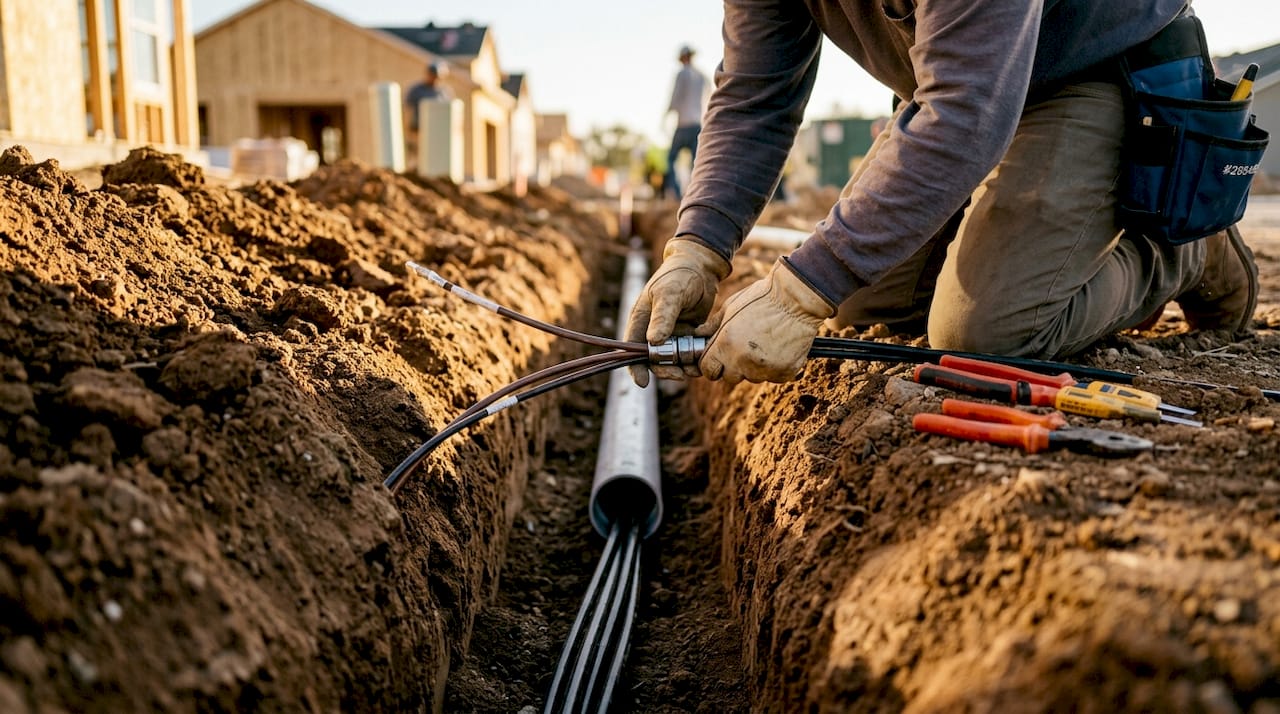
The service lateral and the service drop perform the same job by different routes. The overhead service drop runs from the utility pole to the point of attachment on a building, suspended in the air. The service lateral runs underground from the utility transformer or distribution system to the building’s meter enclosure. NEC Article 230 separates the two because their installation environments, burial requirements, and safety risks differ significantly.
The service point is the boundary where utility ownership ends and customer ownership begins. Utility tariff language defines the service lateral as the cable connecting the distribution system to the customer’s service entrance conductors or to the meter enclosure line side lugs. Everything on the utility side of that meter belongs to the utility. Everything on the customer side, including the service-entrance conductors running to the main panel, belongs to the property owner.
Service-entrance conductors are not the same as the service lateral. The service lateral ends at the meter. The service-entrance conductors begin there and run to the main disconnect or panel inside the building. Confusing these two components leads to scope disputes on job sites and unexpected costs for homeowners who assume the utility handles more than it does.
The table below summarizes the key differences:
| Component | Location | Ownership | NEC Reference |
|---|---|---|---|
| Service Drop | Overhead, pole to building | Utility | NEC Article 230, Part II |
| Service Lateral | Underground, transformer to meter | Utility (to service point) | NEC Article 230, Part III |
| Service-Entrance Conductors | Meter to main panel | Customer | NEC Article 230, Part IV |
Pro Tip: Ask your utility company for its service standards document before any underground work begins. That document defines exactly where the utility’s cable ends and where your conduit must start.
What does NEC code require for service lateral installation?
NEC Article 230 governs service lateral requirements, and it links directly to NEC 300.5 for burial depth rules. These are not suggestions. They are minimum standards, and local utilities often require more.
NEC Table 300.5 specifies burial depths based on the wiring method used:
- Direct-burial cable: 24 inches minimum below finished grade
- Conductors in rigid metal conduit (RMC): 6 inches minimum
- Conductors in intermediate metal conduit (IMC): 6 inches minimum
- Conductors in PVC conduit: 18 inches minimum under residential driveways, 24 inches in other locations
- Under a building slab: 0 inches (the slab itself provides protection)
These depths represent the NEC floor. Many utilities set their own deeper requirements. North Little Rock Electric, for example, requires customer-installed conduit to reach 30 inches deep with a 36-inch bend at the riser for residential underground service. That exceeds the NEC minimum, and the utility’s rule wins on their system.
The Authority Having Jurisdiction (AHJ) must inspect and approve the customer’s wiring before the utility will energize the service. Utility connection happens only after that approval is confirmed. Scheduling that inspection before calling the utility for connection is not optional. It is the required sequence.
Pro Tip: Pull the permit before you trench. The AHJ inspection is a prerequisite for utility energization, and starting without a permit can force you to expose and re-inspect buried conduit.
How does service lateral installation work in practice?
Real-world service lateral installation follows a predictable sequence, but the details vary by utility territory. Contractors who skip steps or assume NEC compliance is enough often face rejection and costly rework.
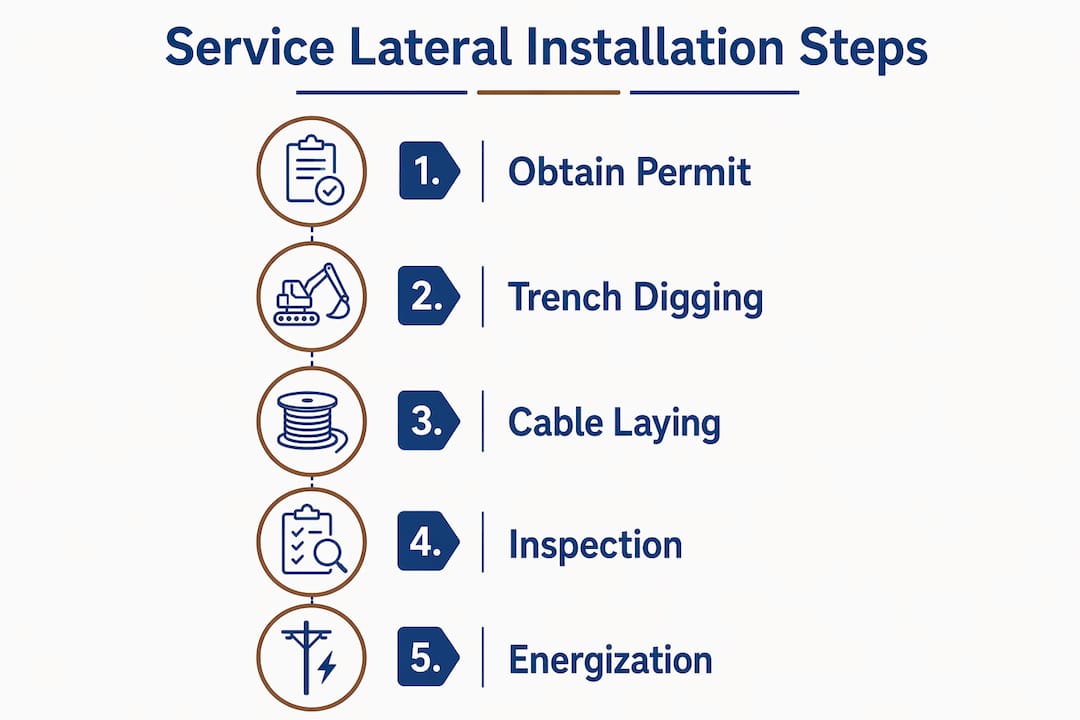
Here is the standard installation sequence most utilities expect:
- Confirm the utility’s point of delivery. Contact the utility before any digging. Confirm the transformer location, the required conduit size, and the exact termination point at the meter socket.
- Pull the electrical permit. File with the local AHJ. Most jurisdictions require a permit for any new service or service upgrade, including underground lateral work. The residential electrical permits guide from Gregbeverlyservices covers what to expect in the Grand Strand area.
- Trench to the required depth. Use the greater of NEC 300.5 minimums or the utility’s specified depth. Mark the trench with warning tape above the conduit.
- Install conduit per utility specs. Conduit type, sweep radius, and riser protection must match the utility’s published standards, not just NEC. Underground service failures most often result from wrong conduit type, incorrect depth at the riser, or missing spare conduit, even when the cable itself is rated correctly.
- Rough in service-entrance wiring. Install the meter socket, main disconnect, and panel wiring on the customer side.
- Schedule the AHJ inspection. The inspector checks the customer side before backfill in many jurisdictions. Confirm local requirements.
- Request utility connection. After the AHJ approves the installation, contact the utility to pull and terminate their conductors and energize the service.
Careful sequencing prevents the most common and expensive delay in service lateral projects: a contractor who calls the utility before the inspection passes and then waits weeks for a reschedule. The residential construction electrical checklist from Gregbeverlyservices maps this sequence clearly for new builds.
Why service lateral knowledge matters for homeowners and contractors
The service lateral sits at the center of several decisions that affect cost, liability, and project timelines. Knowing who owns what prevents disputes before they start.
The ownership boundary at the meter means the utility maintains the cable from the transformer to the meter enclosure. The homeowner or building owner maintains everything from the meter inward. When underground cable fails, the first question is always which side of the meter the fault is on. That answer determines who pays for the repair.
For contractors, scope clarity matters at the bid stage. A proposal that includes “service lateral installation” must specify whether it covers the customer-side conduit only or extends to the utility’s termination point. Mixing up service lateral scope with service-entrance conductor scope is one of the most common sources of underbid electrical projects.
For homeowners, the service lateral becomes relevant during:
- Service upgrades: Moving from 100-amp to 200-amp or 400-amp service often requires upsizing the conduit and conductors on the customer side and coordinating with the utility for their side.
- Generator and EV charger additions: Large loads added at the panel can require a service lateral upgrade if the existing conductors are undersized.
- Property purchases: A home inspection that flags the service entrance should prompt questions about the lateral’s age, material, and burial depth.
Reviewing a service agreement before any electrical upgrade clarifies what the contractor covers and what requires a separate utility application. Consulting utility service requirement documents before planning underground work is a recognized best practice for contractors to avoid costly rework.
Key takeaways
The service lateral is the underground conductor the utility owns up to the meter, and the customer owns everything from the meter inward, with NEC Article 230 and local utility standards governing every inch of the installation.
| Point | Details |
|---|---|
| Service lateral definition | Underground conductor from utility transformer to building meter or service point. |
| Ownership boundary | Utility owns the lateral to the meter; customer owns service-entrance conductors beyond it. |
| NEC burial depth minimums | Direct-burial cable requires 24 inches; conductors in PVC conduit require 18–24 inches. |
| Inspection before energization | AHJ must approve customer wiring before the utility will connect and energize the service. |
| Utility specs override NEC | Local utility standards often exceed NEC minimums and must be followed to avoid rejection. |
What i’ve learned from watching service lateral projects go wrong
Most service lateral problems I’ve seen are not electrical problems. They are coordination problems. A contractor trenches to NEC depth, installs the right cable, and then gets rejected because the utility requires a specific conduit sweep radius that was never in the NEC. The job sits open for two weeks while the trench is re-dug.
The conventional wisdom says “follow the NEC and you’re covered.” That is wrong for service laterals. The NEC sets the floor. The utility sets the ceiling. Every utility in every territory has its own service standards document, and those documents contain requirements that will not appear in any code book. I’ve seen jobs fail inspection for missing a spare conduit stub that the utility wanted for future use. That requirement was nowhere in NEC Article 230.
The other misconception I see constantly is homeowners assuming the utility handles the conduit from the transformer to the meter. In most residential installations, the customer installs the conduit from the meter socket down to a specified depth, and the utility pulls their cable through it. The homeowner paid for that conduit and owns the trench. Knowing that before the project starts changes the budget conversation entirely.
My advice: call the utility before you call a contractor. Get the service standards document. Bring it to your contractor and ask them to confirm their bid covers every line item in it. That one conversation prevents most of the delays and cost overruns I’ve seen on service lateral projects.
— SEO
Get expert help with your electrical service installation

Gregbeverlyservices has handled underground and overhead electrical service installations across the Grand Strand for over 40 years. The team knows local utility requirements, AHJ inspection sequences, and the conduit specs that differ from standard NEC minimums in this area. Whether you need a new residential electrical service installed from scratch, a service upgrade to support a generator or EV charger, or commercial electrical work that requires coordinating with the utility on underground service, Gregbeverlyservices delivers code-compliant results the first time. Contact the team to get a clear scope of work, honest pricing, and a project that passes inspection without surprises.
FAQ
What does electrical service lateral mean?
An electrical service lateral is the underground conductor assembly that runs from the utility’s distribution system or transformer to a building’s service point at the meter. It is the underground equivalent of the overhead service drop.
Who owns the electrical service lateral?
The utility owns the service lateral from the transformer to the meter enclosure. The customer owns the service-entrance conductors from the meter inward to the main panel and disconnect.
How deep does a service lateral need to be buried?
NEC Table 300.5 requires direct-burial cable at 24 inches and conductors in PVC conduit at 18–24 inches, but local utilities often require greater depths. Always confirm with your utility before trenching.
What is the difference between a service lateral and service-entrance conductors?
The service lateral ends at the meter. Service-entrance conductors begin at the meter and run to the main disconnect or panel inside the building. They are separate components with different ownership and code requirements.
Do i need a permit for service lateral installation?
A permit is required in most jurisdictions for any new service or service upgrade that includes underground lateral work. The AHJ must inspect and approve the customer’s wiring before the utility will energize the connection.