
An electrical subpanel is a secondary breaker panel fed directly from your home’s main service panel, distributing power to a specific area or addition. The role of electrical subpanel explained simply: it acts as a regional hub that manages circuits locally without replacing your main panel. The National Electrical Code (NEC) governs how subpanels are installed, and understanding those rules helps you make safe, cost-effective decisions for your home. Greg Beverly Services has spent over 40 years helping Grand Strand homeowners get this right.
How does an electrical subpanel work?
A subpanel receives power through a dedicated feeder circuit from the main panel. That feeder uses two hot wires, one neutral wire, and one ground wire to carry electricity from the main panel to the subpanel’s bus bars. From there, the subpanel distributes power through its own set of circuit breakers to outlets, lights, and appliances in a specific zone of your home.
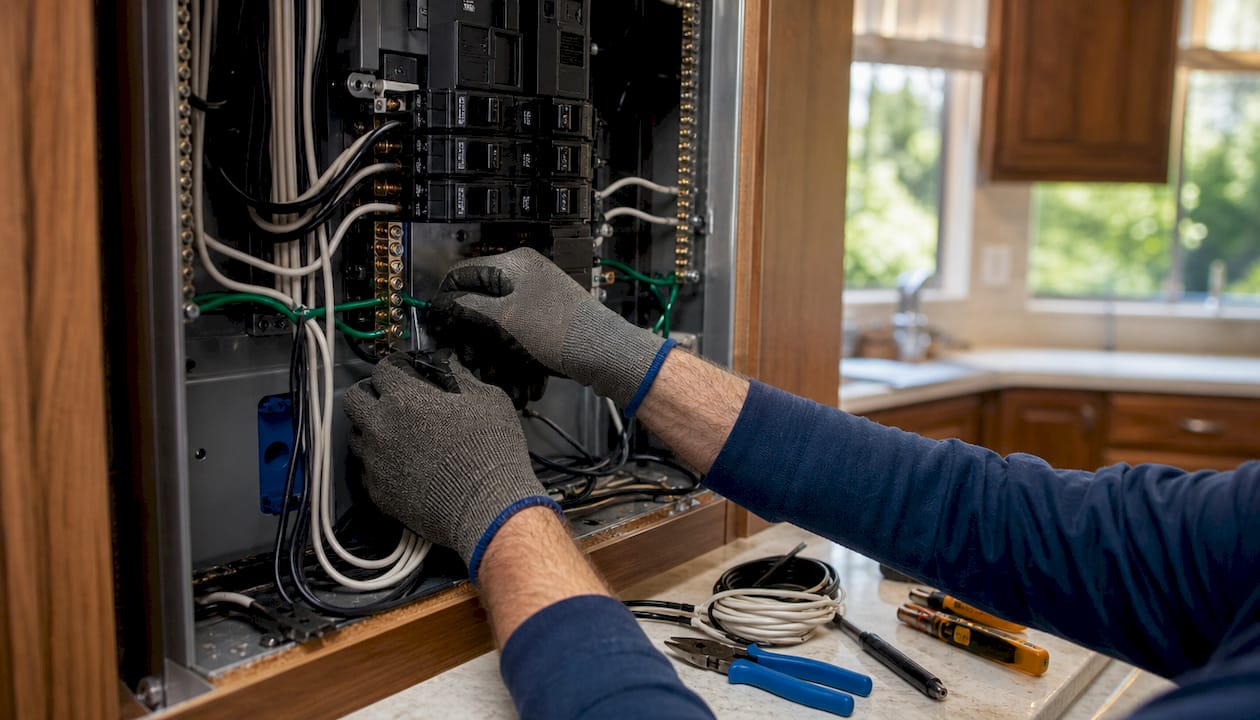
One critical point that trips up many homeowners: a subpanel adds breaker slots, not total electrical capacity. Your home’s total power is still limited by the main service panel’s amperage rating. The subpanel simply reorganizes how that existing power gets distributed.
The subpanel functions like a branch office for your electrical system. It receives a budget of power from headquarters (the main panel) and manages that budget locally. This setup shortens the wire runs needed to reach distant parts of your home, which reduces energy loss and keeps circuits organized.
- Feeder circuit: A dedicated double-pole breaker in the main panel feeds the subpanel.
- Bus bars: The subpanel has its own hot, neutral, and ground bus bars.
- Local breakers: Each circuit in the subpanel zone gets its own breaker for control and protection.
- Separate neutral and ground: Per NEC code, neutral and ground bars must be separate in a subpanel. This differs from the main panel, where they bond together.
Pro Tip: If you open a subpanel and see the neutral and ground wires sharing the same bus bar, that is a code violation. A licensed electrician needs to correct it before your next inspection.
What are the main benefits of installing a subpanel?
Installing a subpanel delivers four concrete advantages for homeowners: better circuit organization, localized power control, reduced voltage drop, and a lower cost path to adding capacity.
Better organization and fault isolation
A subpanel groups related circuits together in one place. If a problem develops in your garage workshop, the subpanel for that area contains the fault. Grouping circuits locally protects the rest of your home from electrical issues in that zone. Your main panel stays clean and uncluttered, which makes troubleshooting faster and safer.
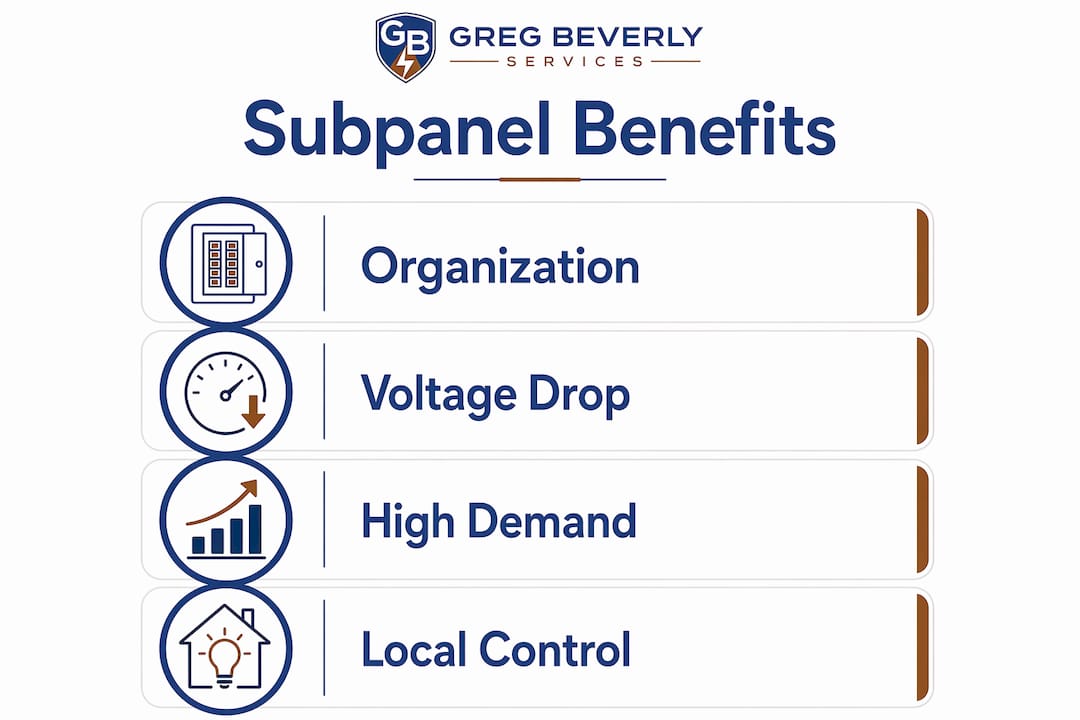
Reduced voltage drop for distant circuits
Voltage drop occurs when electricity travels long distances through wire. Subpanels reduce voltage drop by placing the distribution point closer to the loads it serves, especially when circuits run more than 50 feet from the main panel. A detached garage, a basement workshop, or a backyard structure all benefit from a local subpanel rather than long individual circuit runs.
Supporting modern high-demand circuits
Level 2 EV chargers require 40–50 amps at 240 volts. Most older homes cannot support that demand without adding circuits, and a subpanel is often the cleanest way to do it. The same logic applies to workshops with heavy power tools, home additions, and outdoor kitchens. You can read more about preparing your home in this EV panel readiness guide.
Cost savings compared to a full panel replacement
A subpanel installation typically costs between $400 and $1,800. A full main panel replacement runs $1,500 to $4,000 or more. When your main panel has spare amperage capacity but has run out of breaker slots, a subpanel is the more affordable fix.
- Frees up breaker slots in an overcrowded main panel
- Gives you a dedicated shutoff for a specific area of your home
- Supports high-amperage circuits like EV chargers and workshop equipment
- Costs significantly less than a full panel upgrade when main capacity allows
- Shortens wire runs to reduce energy loss and installation labor
When do you need a subpanel versus a full panel upgrade?
The decision between a subpanel and a full panel upgrade comes down to one question: does your main panel have spare amperage capacity? If the answer is yes, a subpanel is likely the right move. If the answer is no, a full upgrade comes first.
Signs a subpanel is the right choice
Your main panel has spare amperage but has run out of open breaker slots. You are adding a detached garage, a workshop, or a home addition that needs its own circuits. You want to install an EV charger or other high-demand appliance without crowding the main panel. In these cases, a subpanel extends your system without replacing it. For more detail on what home addition electrical upgrades involve, that guide covers the full scope.
Signs you need a full panel upgrade instead
Your main panel is already running at or near its rated amperage. Breakers trip frequently under normal household loads. Your home still has a 100-amp service and you are adding significant new loads. In these situations, a common pitfall is installing a subpanel when the main service is already at capacity, which creates an unsafe overload condition. A full panel upgrade must happen first.
Pro Tip: Never skip a professional load calculation before adding a subpanel. An electrician measures your actual electrical demand against your panel’s rated capacity. That number tells you whether a subpanel is safe or whether a full upgrade is required.
| Situation | Best solution |
|---|---|
| Main panel has spare amps, no open slots | Subpanel |
| Adding a detached garage or workshop | Subpanel |
| Main panel at or near full amperage | Full panel upgrade |
| Frequent breaker trips under normal loads | Full panel upgrade |
| Installing a Level 2 EV charger with capacity available | Subpanel |
A professional load calculation is the only reliable way to know which path fits your home. Guessing costs more in the long run, either through a failed inspection or an unsafe electrical system.
What are the key installation requirements for subpanels?
Proper subpanel installation follows NEC standards that exist for one reason: safety. Skipping any of these requirements creates real hazards and guarantees a failed inspection.
Clearance requirements
The NEC requires specific working clearance around every subpanel: 30 inches wide, 36 inches deep, and at least 6.5 feet high. That space must stay clear at all times for safe access and maintenance. Placing a subpanel behind a water heater or in a cramped closet without meeting these dimensions fails inspection.
Neutral and ground separation
In a main panel, the neutral bar and ground bar bond together. In a subpanel, they must be completely separate. The NEC mandates that the neutral bar in a subpanel stays isolated from the metal enclosure. Bonding them together in a subpanel puts dangerous voltage on the metal cabinet and on any grounded surfaces connected to it.
Choosing the right amperage size
Oversizing a subpanel creates unnecessary cost and installation difficulty. A 200-amp subpanel costs and weighs significantly more than a 60-amp or 100-amp unit. Match the subpanel’s amperage to the actual load it will serve. A licensed electrician can size it correctly based on your planned circuits.
Feeder wire gauge
The wire feeding the subpanel must match its amperage rating. A 60-amp subpanel requires 6-gauge copper wire. A 100-amp subpanel requires 4-gauge copper wire. Using undersized wire creates a fire hazard. Using oversized wire wastes money. The installation and distribution standards that govern electrical work exist precisely to prevent these errors.
- Permits: Always pull a permit for subpanel work. Unpermitted electrical work creates liability and insurance problems when you sell your home.
- Inspection: A licensed inspector verifies clearance, wire gauge, neutral/ground separation, and breaker sizing.
- Feeder breaker: The double-pole breaker feeding the subpanel in the main panel must match the subpanel’s amperage rating.
- Panel location: Mount subpanels in dry, accessible locations away from plumbing and heat sources.
| Subpanel amperage | Minimum feeder wire (copper) | Typical use case |
|---|---|---|
| 60 amps | 6-gauge | Small workshop, garage |
| 100 amps | 4-gauge | Large addition, EV charger |
| 150 amps | 1-gauge | Major home addition |
Permits and inspections are not optional bureaucracy. They protect you, your family, and your home’s resale value. A failed inspection on unpermitted work can require tearing out completed work and starting over.
Greg Beverly Services: professional subpanel installation in the Grand Strand
Greg Beverly Services brings over 40 years of residential electrical experience to every subpanel project in the Grand Strand area. The team handles load calculations, proper sizing, permit filing, and inspection coordination so you never have to guess whether your system is safe.

Whether you need a subpanel for a new workshop, a home addition, or an EV charger installation, Greg Beverly Services delivers code-compliant work with transparent communication from start to finish. For homeowners who need a broader review of their electrical system, the residential electrical services page covers the full range of options available. Contact Greg Beverly Services to schedule a load calculation and find out exactly what your home needs.
FAQ
What is the main function of an electrical subpanel?
A subpanel distributes power from the main service panel to a specific area of the home through its own set of circuit breakers. It adds breaker slots and improves circuit organization without increasing the home’s total electrical capacity.
Does a subpanel increase my home’s total electrical capacity?
No. A subpanel only adds circuit breaker slots and redistributes existing power. If your home needs more total amperage, a full main panel upgrade is required before or instead of a subpanel.
How much does subpanel installation cost?
Subpanel installation typically costs between $400 and $1,800, depending on amperage size, location, and local labor rates. That is significantly less than a full panel replacement, which runs $1,500 to $4,000 or more.
Do I need a permit to install a subpanel?
Yes. Subpanel installation requires a permit and inspection in virtually every jurisdiction. Unpermitted work creates safety risks and can cause problems with home insurance and resale.
Can I install a subpanel myself?
Subpanel installation involves working with live electrical components and must meet NEC code requirements. Most jurisdictions require a licensed electrician to perform or supervise the work to pass inspection.
Key Takeaways
A subpanel expands circuit capacity and improves power organization in your home, but it requires proper sizing, NEC-compliant installation, and a professional load calculation to work safely.
| Point | Details |
|---|---|
| Subpanels add slots, not capacity | A subpanel increases breaker space but does not raise your home’s total amperage limit. |
| Neutral and ground must be separate | NEC requires isolated neutral and ground bars in every subpanel to prevent dangerous voltage on metal parts. |
| Load calculation comes first | Always have a licensed electrician calculate your current load before deciding between a subpanel and a full upgrade. |
| Cost advantage is real | Subpanel installation costs $400–$1,800 versus $1,500–$4,000 or more for a full panel replacement. |
| Permits protect your investment | Unpermitted subpanel work creates inspection failures, insurance issues, and resale complications. |