
Your electrical panel, known in the industry as the load center or breaker panel, requires replacement when it can no longer safely distribute power to your home’s circuits or shows clear signs of failure. Knowing when to replace your electrical panel protects your family from fire hazards, prevents costly damage, and keeps your home ready for modern electrical demands. The triggers range from visible warning signs like burning smells and scorch marks to less obvious factors like panel age, brand history, and growing load requirements. This guide covers every factor you need to make a confident, informed decision.
What are the common signs that indicate when to replace an electrical panel?
Recognizing the warning signs early is the fastest way to know if your panel needs replacing before a problem becomes a crisis.
-
Frequent breaker trips. A breaker that trips once after an overload is doing its job. A breaker that trips repeatedly signals an underlying problem the breaker cannot fix on its own. Resetting it over and over masks a capacity mismatch or internal component failure that only a licensed electrician can properly diagnose.
-
Burning smells, scorch marks, or heat. If your panel smells like burning plastic or the cover feels warm to the touch, treat it as an emergency. Overheating damages wiring insulation and creates a direct fire risk. Scorch marks around breakers or the panel door are physical proof that something has already gone wrong.
-
Persistent flickering or dimming lights. A light that briefly dims when the refrigerator compressor kicks on is normal. Persistent flickering under load points to voltage instability inside the panel itself. That instability can damage sensitive electronics and appliances over time.
-
Fuse boxes still in service. If your home still uses a fuse box rather than a circuit breaker panel, replacement is overdue. Fuse-based systems cannot safely handle modern electrical loads and are a red flag for home insurers and buyers alike.
-
Recalled or problem-prone brands. Federal Pacific Electric Stab-Lok panels and Zinsco panels carry documented manufacturing defects. These brands are recommended for replacement regardless of how the panel looks or behaves on the surface. The failure modes are internal and unpredictable.
Pro Tip: If you are unsure of your panel’s brand, open the door and look for the manufacturer’s name on the main breaker or the interior label. A quick photo sent to a licensed electrician can confirm whether you have a recalled model.
A burning smell from your electrical panel is never a “wait and see” situation. Call a licensed electrician the same day. The risk of fire is immediate.
How does the age and brand of your electrical panel affect replacement timing?
Age and brand are two of the most reliable indicators for planning an electrical panel upgrade, even when no obvious symptoms are present.
Electrical panels last roughly 20 to 40 years, and the 25 to 40-year window is when professional inspection becomes non-negotiable. That lifespan means millions of homes built in the 1980s and 1990s are now entering the inspection zone. Reaching that age does not automatically mean the panel must go, but it does mean you need a licensed electrician to evaluate it.
Age alone does not guarantee replacement is necessary. A 35-year-old panel in a home with stable, modest electrical demand and no visible damage may still pass inspection. The decision becomes urgent when age combines with any of the warning signs listed above, a known-problem brand, or a planned increase in electrical load.
- Panels from Federal Pacific Electric, Zinsco, and Pushmatic are flagged for replacement regardless of age or condition.
- A panel under 20 years old with no symptoms and adequate capacity rarely needs replacement.
- A panel between 25 and 40 years old warrants a professional inspection, especially before a home sale or major renovation.
- Any panel over 40 years old should be evaluated promptly, even without visible problems.
The brand factor is particularly important for Grand Strand homeowners buying older properties. A home inspection that identifies a Federal Pacific panel should be treated as a replacement trigger, not a negotiating chip.
When should you plan an electrical panel capacity upgrade?
Capacity-driven replacement is the most forward-looking reason to upgrade, and it is the one most homeowners overlook until they are already in trouble.
Adding high-demand equipment like EV chargers, whole-home generators, heat pumps, or electric dryers to a home with an older 100-amp panel almost always requires a panel upgrade. A Level 2 EV charger alone draws 30 to 50 amps continuously. Stacking that demand on a panel already running near capacity creates exactly the kind of chronic overload that leads to breaker failure and fire risk.
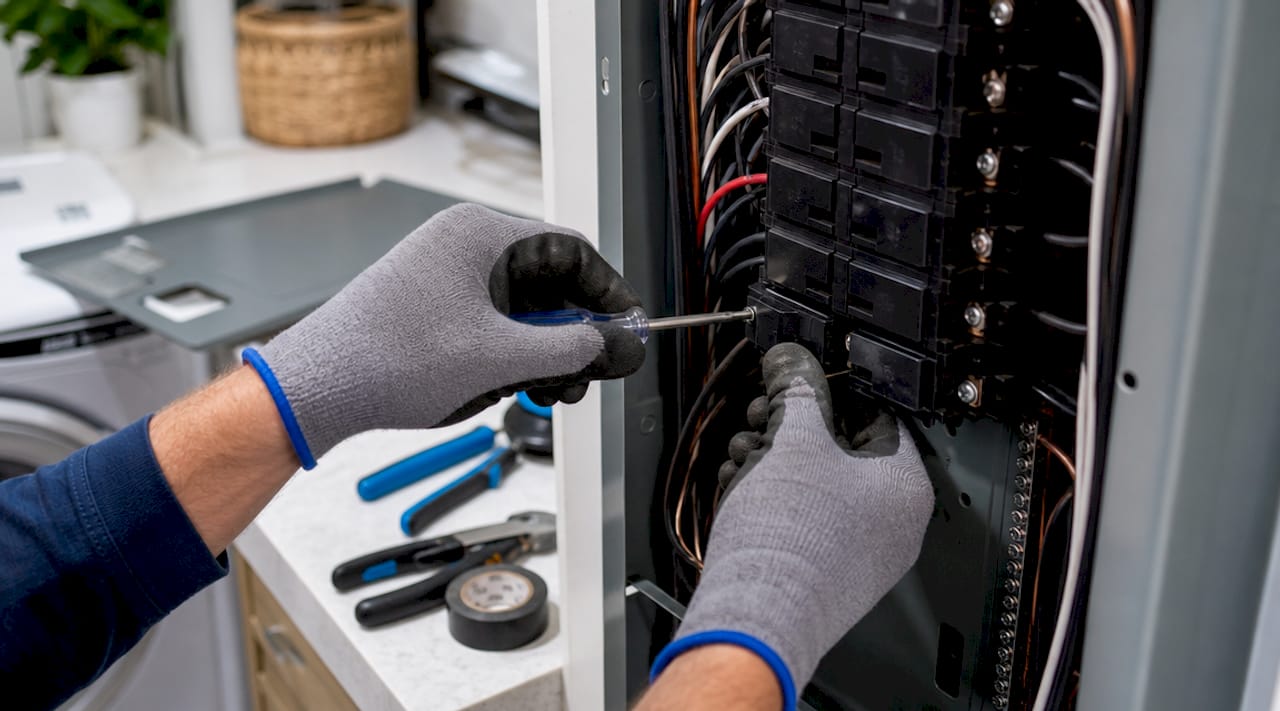
Home renovations are another common trigger. Adding a kitchen, finishing a basement, or building an addition means new circuits. If your current panel has no open breaker slots and no room to expand, replacement is the only safe path forward.
| Situation | Likely panel action needed |
|---|---|
| Adding a Level 2 EV charger | Upgrade to 200-amp panel in most cases |
| Installing a whole-home generator | Panel evaluation and possible transfer switch addition |
| Major kitchen or bathroom remodel | Assess available slots; upgrade if at capacity |
| Home built before 1990 with 100-amp service | Upgrade to 200-amp for modern load demands |
| Adding solar panels or battery storage | Full load assessment and likely panel upgrade |
Pro Tip: When planning any major home upgrade, ask your electrician to size the new panel for your next 5 to 10 years of demand, not just your current needs. Proactive panel planning around anticipated demand changes minimizes costs and avoids a second replacement down the road.
What does the electrical panel replacement process actually involve?
Understanding the replacement process removes the uncertainty that causes many homeowners to delay a necessary upgrade.
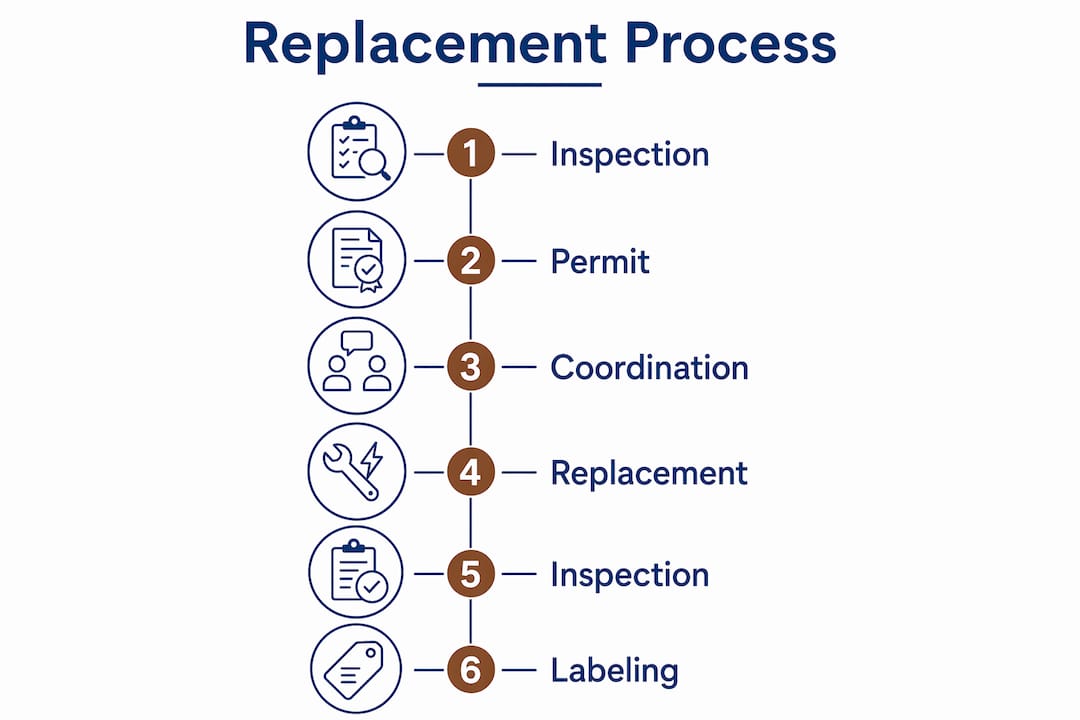
Step 1: Professional inspection and load assessment. A licensed electrician evaluates your current panel’s condition, brand, age, and capacity against your home’s actual electrical load. This assessment determines whether you need a like-for-like replacement or an upgrade to higher amperage service, typically from 100 amps to 200 amps.
Step 2: Permit application. Panel replacement requires a permit in virtually every jurisdiction, including all municipalities in the Grand Strand area. Your electrician handles the permit application. Skipping this step creates liability issues and can complicate a future home sale.
Step 3: Utility coordination. The power company must disconnect service at the meter before work begins. Your electrician schedules this with the utility provider. Most replacements require a planned outage of four to eight hours.
Step 4: Physical replacement. The old panel is removed, new wiring connections are made to the replacement panel, and all circuits are reconnected and labeled. A 200-amp upgrade may also require new service entrance cable from the meter to the panel.
Step 5: Inspection and reconnection. A municipal inspector verifies the installation meets current National Electrical Code (NEC) standards before power is restored. Your electrician coordinates this inspection as part of the job.
Pro Tip: Always request that your electrician label every circuit clearly during the replacement. A properly labeled panel saves hours of troubleshooting during future repairs or renovations.
| Phase | Typical timeframe |
|---|---|
| Inspection and permit | 3 to 7 business days |
| Utility coordination | 1 to 5 business days |
| Physical replacement | 4 to 8 hours on-site |
| Municipal inspection | 1 to 3 business days after installation |
How do you decide between repairing a breaker and replacing the whole panel?
Repair versus replacement is a judgment call that depends on four factors: the age of the panel, the nature of the problem, the cost of the repair, and the safety risk of leaving the panel in service.
When repair costs approach half the cost of a full replacement, replacement is almost always the better financial and safety decision. Spending $400 to replace a single breaker in a 35-year-old panel that will need full replacement in two years is money wasted.
- A single tripping breaker in a panel under 15 years old with no other symptoms: repair is reasonable.
- Multiple failing breakers, a panel over 25 years old, or any heat or burning smell: replacement is the right call.
- A recalled brand like Federal Pacific or Zinsco: replace the panel regardless of repair cost or symptom severity.
- Capacity mismatch or internal failures causing repeated trips: resetting breakers is not a fix. Professional evaluation is required immediately.
Patchwork repairs on an aging panel create a false sense of security. Each repair addresses one symptom while the underlying panel continues to age and degrade. A full replacement resets the clock and brings your home into compliance with current NEC standards.
Key takeaways
Replacing your electrical panel at the right time, based on age, brand, symptoms, and load demands, is the single most effective way to prevent electrical fires and support your home’s modern power needs.
| Point | Details |
|---|---|
| Age triggers inspection | Panels 25 to 40 years old require professional evaluation, even without visible symptoms. |
| Brand matters as much as age | Federal Pacific, Zinsco, and fuse-based panels should be replaced regardless of condition. |
| Capacity drives proactive upgrades | EV chargers, heat pumps, and renovations often push older panels past their safe limits. |
| Repair has a cost threshold | When repair costs exceed half the replacement cost, full replacement delivers better value and safety. |
| Permits and professionals are non-negotiable | Panel replacement requires licensed electricians, utility coordination, and municipal inspection. |
What I’ve learned after years of watching homeowners delay this decision
The homeowners who call after a panel fire always say the same thing: they noticed the smell or the flickering months earlier and assumed it would sort itself out. It never does. Electrical panels do not self-correct. They degrade.
What I find more interesting is the opposite mistake. Some homeowners replace a perfectly functional 20-year-old panel because a contractor mentioned it in passing during a kitchen remodel quote. Age alone is not a replacement trigger. A panel inspection by a qualified electrician, not a general contractor, is the right first step. That inspection either confirms the panel is fine or gives you documented evidence of why it needs to go.
The smartest approach I have seen is planning replacement around a known future demand. If you know you are buying an EV in the next two years or adding a pool, schedule the panel upgrade now. You get the right-sized panel for your actual future load, you avoid a second mobilization cost, and you stop worrying about whether your current panel can handle the next thing you plug in. Check out the panel amperage upgrade guide from Gregbeverlyservices for a detailed breakdown of how to size your replacement correctly.
The Grand Strand climate adds one more variable worth mentioning. Coastal humidity accelerates corrosion inside panels. A panel that might last 35 years in a dry inland climate may show corrosion-related issues at 25 years here. That is a local reality worth factoring into your inspection timeline.
— SEO
Get your panel evaluated by a trusted Grand Strand electrician
If any of the signs in this article sound familiar, the next step is a professional inspection, not a Google search.

Gregbeverlyservices has served residential and commercial customers across the Grand Strand for over 40 years. The team handles every aspect of panel work, from initial load assessments and permit management to full panel replacement and upgrades built to current NEC standards. Whether you are adding an EV charger or a whole-home generator, or you simply want to know whether your aging panel is still safe, Gregbeverlyservices provides honest evaluations and skilled workmanship you can rely on. Contact the team today to schedule your inspection.
FAQ
How often should an electrical panel be replaced?
Electrical panels last 20 to 40 years, so replacement is not on a fixed schedule. Inspection is recommended once a panel reaches 25 years, with replacement driven by condition, brand, and load demands rather than age alone.
Is it safe to stay in a home with a Federal Pacific panel?
Federal Pacific Electric Stab-Lok panels carry documented defects that make them a fire risk. Replacement is recommended as soon as possible, and you should avoid overloading circuits in the meantime.
What size panel do most homes need when upgrading?
Most homes upgrading from an older 100-amp panel move to a 200-amp service, which handles modern appliances, EV chargers, and HVAC systems comfortably. Homes with very high demand may require 400-amp service.
Can I replace my electrical panel myself?
Panel replacement is not a DIY project. It requires a licensed electrician, a municipal permit, utility coordination to disconnect service at the meter, and a post-installation inspection to meet NEC code requirements.
How much does electrical panel replacement cost?
Panel replacement costs vary based on panel size, local permit fees, and whether a service entrance upgrade is needed. A licensed electrician can provide an accurate estimate after a load assessment and inspection of your current setup.