
Electrical panel replacement is the process of removing an outdated or unsafe electrical panel and installing a new, code-compliant unit that meets your home’s current and future power demands. Understanding what electrical panel replacement process explained means in practice helps you avoid surprises, budget accurately, and stay safe. The work involves much more than swapping a metal box. It requires load calculations, permits, utility coordination, and a licensed electrician working to National Electrical Code (NEC) standards. This guide walks you through every stage, from the first inspection to the final sign-off.
What are the essential steps in the electrical panel replacement process?
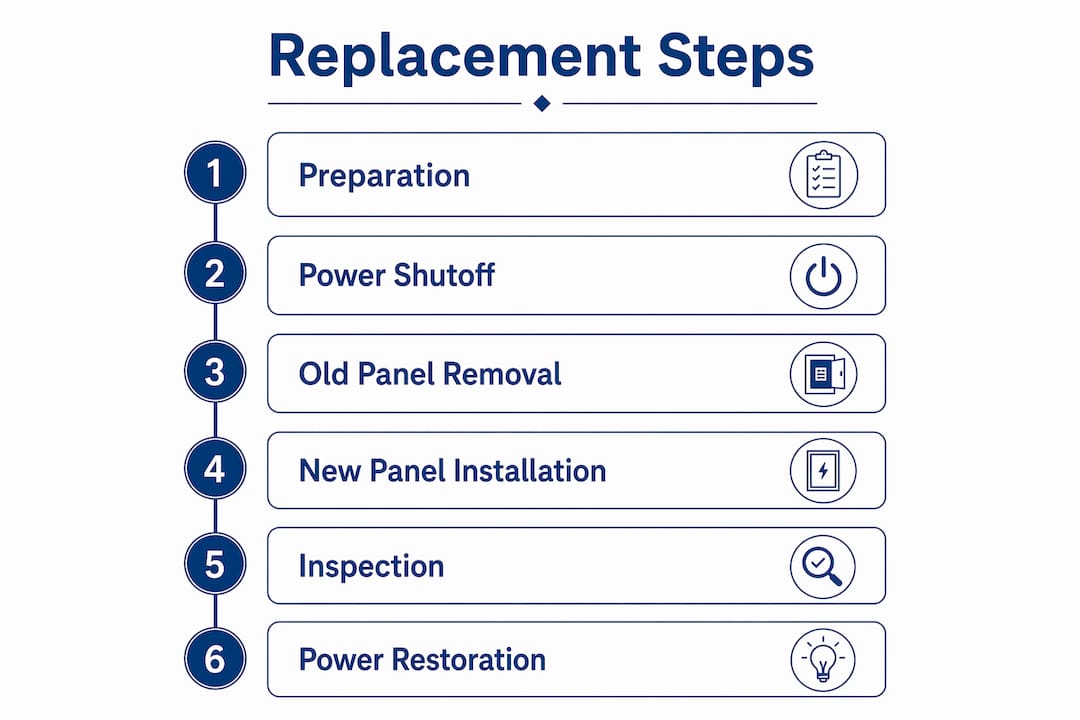
The electrical panel upgrade process follows a clear sequence. Skipping any step creates safety risks and code violations that can cost far more to fix later.
-
Initial assessment and load calculation. A licensed electrician inspects your current panel and calculates your home’s total electrical load. Load calculation per NEC Article 220 determines whether an upgrade is necessary and what size panel your home actually needs. This step also protects you from paying for a larger panel than your circuits require.
-
Permit acquisition. Your electrician pulls the required permits from your local building department before any work begins. No reputable contractor skips this step. Permits create a legal record of the work and trigger the inspection that protects your home’s resale value.
-
Utility coordination. The electrician contacts your utility company to schedule a power shutoff at the meter. This is not optional. The service entrance conductors feeding your panel carry live voltage that cannot be de-energized from inside your home.
-
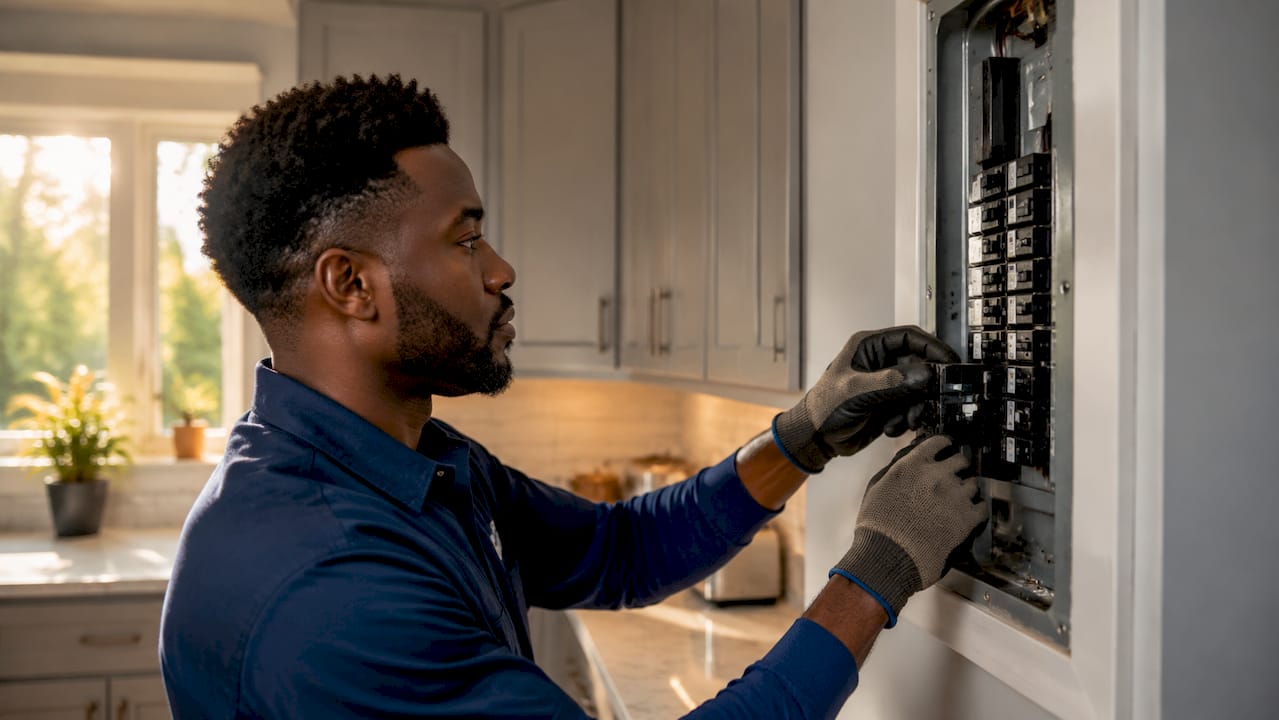
Removal of the old panel. Once power is cut, the electrician documents all existing wiring connections, photographs the panel interior, and carefully removes each circuit. Scope of work often extends beyond the panel box itself to include the meter base, service entrance conductors, and grounding system.
-
Installation of the new panel. The new panel is mounted, grounded, and bonded. Breakers are installed and sized to match each circuit. Arc Fault Circuit Interrupters (AFCI) and Ground Fault Circuit Interrupter (GFCI) breakers are added where current NEC requires them.
-
Circuit reconnection and labeling. Every circuit is reconnected, tested, and clearly labeled. Testing each circuit after installation confirms functionality and safety before the inspector arrives.
-
Final inspection and power restoration. A local building inspector reviews the completed work. Once approved, the utility restores power. The homeowner receives documentation of the passed inspection.
The typical project takes one full day with a 6–8 hour power outage. That timeline assumes no unexpected wiring issues are discovered during the removal phase.
Pro Tip: Plan your outage day in advance. Charge devices the night before, arrange refrigerated food storage, and confirm your contractor has a firm utility shutoff window before the job starts.
How do safety standards and code compliance impact panel replacement?
Code compliance is not a formality. It is the difference between a panel that protects your family and one that creates a fire hazard.
NEC 2026 working clearance requirements mandate 30 inches wide, 36 inches deep, and 78 inches high of clear space around any panel. That standard exists so electricians and firefighters can work safely in an emergency. If your panel is currently blocked by shelving or stored items, your electrician will flag it before work begins.
Key code requirements every homeowner should know:
- AFCI protection is required by NEC in bedrooms, living rooms, kitchens, and most other living spaces. These breakers detect dangerous arcing faults that standard breakers miss.
- GFCI protection is required in bathrooms, kitchens, garages, and outdoor circuits. GFCI breakers can be installed at the panel level to cover entire circuits.
- Grounding and bonding must meet current NEC standards. Older homes often have grounding systems that no longer comply, requiring upgrades during panel replacement.
- Permits and inspections are legally required in virtually every jurisdiction. Proper permits and documentation protect you during home sales, insurance renewals, and municipal audits.
“Insurance carriers frequently require replacement of known hazardous panels regardless of capacity.” — NEC 408 & 230 Requirements
Legacy panels like Federal Pacific Stab-Lok and Zinsco are recognized fire hazards that most insurance companies will not cover. If your home has either brand, replacement is not optional. It is a safety and financial necessity.
What costs and factors influence the price of panel replacement?
Transparent pricing starts with understanding what drives the cost up or down.
Upgrading from a 100-amp to a 200-amp panel typically costs $3,200–$5,500 depending on local codes and the full scope of work. That range reflects the most common residential upgrade scenario in 2026. Your actual cost depends on several variables.
| Cost Factor | Simple Replacement | Full Service Upgrade |
|---|---|---|
| Panel box and breakers | Included | Included |
| Meter base replacement | Sometimes needed | Usually required |
| Service entrance conductors | Reused if compliant | Replaced to meet code |
| Grounding system upgrade | Minor update | Full replacement |
| Permit and inspection fees | Included | Included |
| Typical total range | $1,500–$2,500 | $3,200–$5,500 |
A simple replacement swaps the panel box when the existing meter base and service conductors already meet code. A full service upgrade replaces everything from the utility connection point to the panel. Most older homes require the full upgrade to pass inspection.
Local utility requirements also affect price. Some utilities charge fees for meter removal and reinstallation. Others require specific equipment brands or installation methods that add labor time.
From a financial perspective, a properly documented upgrade adds measurable value to your home. Buyers and their inspectors look for updated panels. Insurance carriers often lower premiums after a verified upgrade. For homeowners adding EV charger installation or a whole-home generator, the panel upgrade is a prerequisite, not an add-on.
Pro Tip: Get at least two written estimates that itemize labor, materials, permit fees, and utility coordination separately. A vague lump-sum quote makes it impossible to compare contractors fairly.
Can homeowners safely replace an electrical panel themselves?
The short answer is no. Panel replacement universally requires licensed professionals for safety and legal compliance, regardless of a homeowner’s general skill level.
Here is why DIY panel replacement is not a viable option:
- Live service conductors. The wires entering your panel from the utility pole carry voltage that cannot be shut off from inside your home. Only the utility company can de-energize them. Working near live service conductors without proper training and equipment is life-threatening.
- Permit requirements. Most jurisdictions require a licensed electrician to pull permits for panel work. A homeowner who installs a panel without permits faces fines, forced removal of the work, and serious complications when selling the home.
- Utility coordination. Scheduling a meter pull requires a licensed contractor account with the utility in most states. Homeowners cannot independently arrange this step.
- Grounding and bonding complexity. Improper grounding is one of the leading causes of electrical fires. Getting it right requires knowledge of NEC Article 250 and the specific requirements of your local jurisdiction.
- Insurance consequences. An unpermitted panel replacement voids most homeowner’s insurance policies. If a fire starts in an unpermitted panel, your insurer has grounds to deny the claim entirely.
Understanding when to replace your electrical panel is a skill homeowners can develop. Executing the replacement safely is a job for a licensed electrician with the right tools, permits, and utility relationships.
What should homeowners expect on installation day and afterward?
Knowing the day’s workflow removes the anxiety from the process. Here is what a standard installation day looks like.
-
Morning arrival and setup. Your electrician arrives, confirms the utility shutoff window, and prepares the work area. The 30-inch by 36-inch clearance zone around the panel must be completely clear before work begins.
-
Meter pull and power cutoff. The utility technician removes the meter, cutting power to the entire home. From this point, the electrician works on de-energized equipment inside the house.
-
Old panel removal and documentation. The electrician photographs the existing wiring, labels each circuit, and removes the old panel. This documentation matters. Well-documented replacements with photos and wiring diagrams prevent future disputes and support insurance claims.
-
New panel installation and circuit reconnection. The new panel is mounted, grounded, and bonded. Each circuit is reconnected to the correct breaker, sized appropriately, and labeled on the directory card inside the panel door.
-
Testing and pre-inspection check. The electrician tests every circuit before calling for inspection. This catches any wiring errors before the inspector arrives.
-
Inspector visit and approval. The local building inspector reviews the installation against current code. Approval is documented on the permit card.
-
Meter reinstallation and power restoration. The utility reinstalls the meter and restores power. Your electrician confirms all circuits are functioning correctly before leaving.
After installation, keep all documentation in a safe place. This includes the permit, the inspection approval, load calculation records, and any photos taken during the job. That file is worth real money when you sell your home or file an insurance claim.
Key takeaways
A successful electrical panel replacement depends on licensed professionals, proper permits, and strict NEC code compliance from the first load calculation to the final inspection.
| Point | Details |
|---|---|
| Start with a load calculation | NEC Article 220 load calculations determine the correct panel size and prevent dangerous overloads. |
| Permits protect your investment | Documented permits and inspections safeguard home resale value, insurance coverage, and legal compliance. |
| Budget for the full scope | Full service upgrades cost $3,200–$5,500 and often include meter base and grounding system replacement. |
| DIY is not a safe option | Live service conductors, permit rules, and insurance requirements make professional installation mandatory. |
| Keep all documentation | Photos, load calcs, and inspection records prevent disputes and support future insurance claims. |
What i’ve learned after watching hundreds of panel jobs go right and wrong
Most homeowners underestimate how much the permit and inspection process works in their favor. I have seen homeowners push back on permit fees, viewing them as unnecessary overhead. That perspective flips fast when a home sale falls through because an unpermitted panel shows up on an inspection report.
The other misconception I encounter constantly is treating panel size as the only variable. A 200-amp panel installed with undersized service conductors or a non-compliant grounding system is not a safe upgrade. It is a code violation waiting to be discovered. Formal load calculations protect homeowners from both unnecessary upgrades and dangerous underestimates, especially as EV chargers and smart home systems push residential electrical demand higher every year.
The trend I find most interesting right now is the number of panel upgrades triggered not by failure but by addition. Homeowners adding a Level 2 EV charger or a whole-home generator discover their existing 100-amp panel simply cannot support the new load. That is a smart, proactive reason to upgrade. It is far better than waiting for breakers to trip repeatedly or, worse, for an aging Federal Pacific or Zinsco panel to become a fire statistic.
My honest advice: select a licensed electrician with documented experience in your local jurisdiction, ask to see their permit history, and get the load calculation in writing before any work begins. The steps to modernize an old panel are straightforward when the right professional is running them.
— SEO
How Gregbeverlyservices handles your panel replacement from start to finish
Gregbeverlyservices has served residential and commercial customers across the Grand Strand area for over 40 years. Panel replacements are a core part of that work, and the team handles every stage in-house, from the initial load calculation and permit filing to utility coordination and final inspection.

Every job follows current NEC standards and local code requirements, so you never have to wonder whether the work will pass inspection. Gregbeverlyservices also supports homeowners planning residential electrical upgrades that go beyond the panel, including generator connections and EV charger circuits. If your panel is aging, undersized, or flagged by your insurance carrier, contact Gregbeverlyservices for a straightforward assessment and a written estimate with no guesswork.
FAQ
How long does an electrical panel replacement take?
Panel replacement typically takes one full day with a 6–8 hour power outage. Complex jobs involving full service entrance replacement may run slightly longer.
What size panel does my home need?
Most modern homes require a 200-amp panel to support current appliances and future additions like EV chargers. A licensed electrician determines the correct size through a formal NEC Article 220 load calculation.
Do i need a permit to replace an electrical panel?
Yes. Permits are legally required in virtually every jurisdiction for panel replacement. Unpermitted work creates insurance, resale, and safety risks that far outweigh the cost of the permit.
What are the signs my panel needs replacement?
Frequent breaker trips, flickering lights, a Federal Pacific Stab-Lok or Zinsco brand panel, burn marks near breakers, and a panel rated below 150 amps are all clear indicators that replacement is overdue.
Will my homeowner’s insurance cover panel replacement?
Standard policies do not cover elective upgrades, but many insurers require replacement of hazardous panels like Federal Pacific Stab-Lok as a condition of continued coverage. A properly permitted and inspected replacement can also lower your premium.