
An electrical installation safety checklist is a structured, phased document that verifies all wiring, devices, and protective systems meet established safety standards before a property is occupied or re-leased. The National Electrical Code (NEC), published by the National Fire Protection Association (NFPA), sets the baseline for these inspections across the United States. Every checklist covers three mandatory phases: rough-in, service entrance, and final inspection. Licensed electricians use these checklists to confirm compliance and issue Certificates of Electrical Safety (COES), which protect both homeowners and property managers from liability.
1. What does an electrical installation safety checklist cover?
An electrical installation safety checklist is the industry term for what inspectors and electricians call a phased inspection protocol. Inspections span three phases: rough-in, service entrance, and final inspection, each carrying 10–20 specific checklist items. Each phase targets a different stage of the installation, so skipping one leaves real gaps in your compliance record.
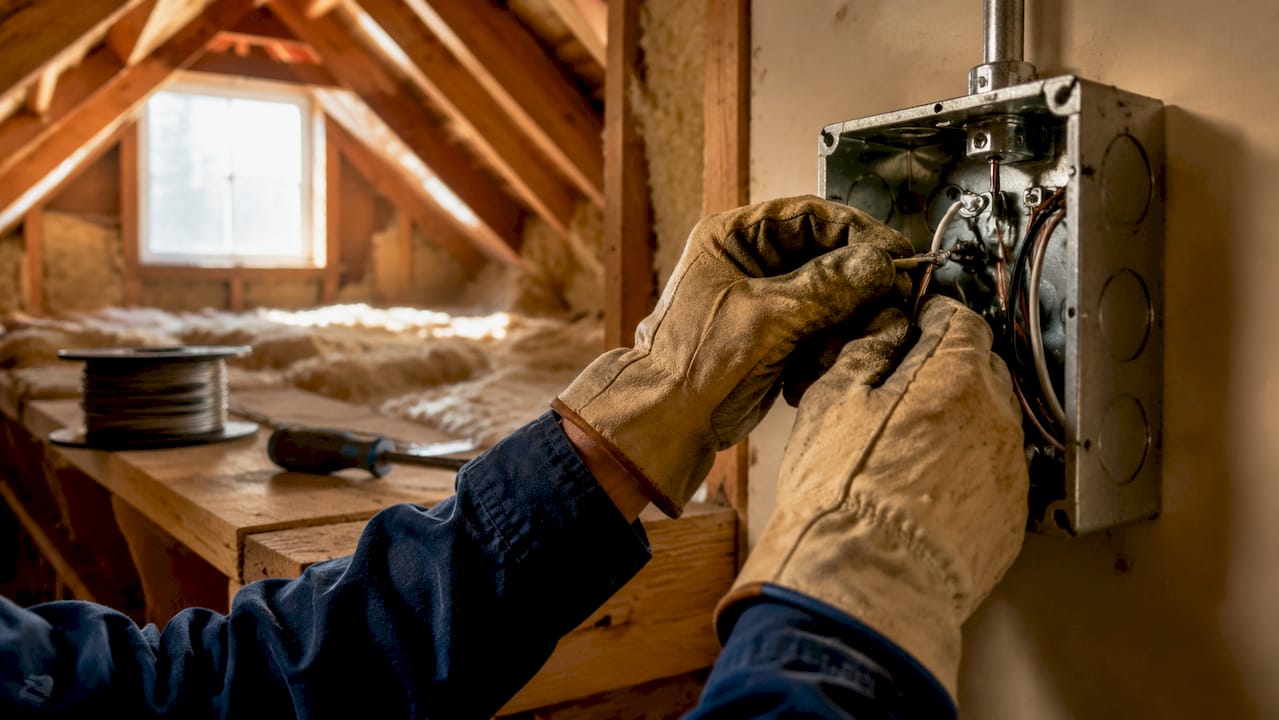
The rough-in phase checks work before walls close. Inspectors verify box fill compliance under NEC 314.16, confirm cables are secured within 12 inches of every box, and confirm Arc Fault Circuit Interrupter (AFCI) protection is in place for bedrooms and living areas. The service entrance phase covers conductor sizing, meter socket specifications, and clearance distances from windows and rooflines. The final inspection tests every protective device and confirms the panel is fully labeled.
Pro Tip: Retain every signed inspection report in a dedicated property file. That paper trail is your first line of defense if a tenant or buyer raises a safety dispute later.
2. Rough-in inspection: what to check before walls close
The rough-in inspection is your only chance to verify concealed wiring before drywall covers it permanently. Box fill calculations under NEC 314.16 must be confirmed at this stage. Overcrowded boxes cause overheating, and that risk disappears from view once the wall is closed.
Cable securing is another non-negotiable item. The NEC requires cables to be fastened within 12 inches of every metal box and every 4.5 feet along their run. AFCI breakers must be installed for all 120-volt, 15- and 20-amp branch circuits in sleeping rooms, as required by NEC 210.12. Inspectors also check that wire gauge matches the breaker rating and that no splices exist outside approved junction boxes.
3. Service entrance inspection: clearances and conductor sizing
The service entrance is where utility power meets your home’s wiring system. Inspectors check that overhead service conductors maintain the clearances required by NEC 230, including a minimum of 10 feet above finished grade and 3 feet from windows. Conductor sizing must match the calculated load, and the meter socket must meet utility specifications.
Undersized conductors at the service entrance are a fire risk that visual checks alone will not catch. Hidden faults like incorrect cable sizing or excessive voltage drop beyond the 5% recommendation can cause device failure or fire even when the installation looks clean. A licensed electrician uses load calculations and conductor ampacity tables to confirm sizing is correct.
4. Final inspection: testing GFCIs, AFCIs, and panel labeling
The final inspection is the most visible phase, but it is also the most commonly failed. Ground Fault Circuit Interrupter (GFCI) protection is required under NEC 210.8 for all receptacles in bathrooms, kitchens, garages, outdoors, and unfinished basements. Each GFCI must be tested with a plug-in tester or the built-in test button to confirm it trips and resets correctly.
AFCI breakers are tested by pressing the test button on the breaker itself. Panel labeling is a frequent fail point. Missing or illegible circuit labels on consumer units make immediate circuit identification impossible during emergencies. Every circuit must be labeled clearly, and all cover plates must be installed before the inspector signs off.
Pro Tip: Photograph your completed panel directory and store it digitally. If the paper label fades or gets damaged, you have a backup that satisfies most inspectors and AHJs.
5. How to test and document RCDs and safety switches
Safety switches, known as Residual Current Devices (RCDs) in technical standards, are the primary protection against electrocution. RCDs require push-button testing at least every 1–2 years because the internal spring mechanism can degrade even when the circuit itself functions normally. A working circuit does not guarantee a working RCD.
The test procedure is straightforward:
- Press the test button on the RCD or safety switch at the switchboard.
- Confirm the switch trips immediately and cuts power to the protected circuit.
- Reset the switch and verify power is restored.
- Record the date, result, and tester’s name in your inspection log.
Standard electrical safety tests also include continuity of protective conductors, insulation resistance, polarity verification, and RCD operation within specified milliseconds. BS 7671 mandates RCD trips within 300 ms at rated current and 40 ms at five times rated current for Type AC RCDs. That response time standard exists because even a fraction of a second matters when someone is in contact with a live conductor.
Pro Tip: Set a calendar reminder tied to daylight saving time changes. Testing RCDs and smoke alarms on the same day twice a year keeps both tasks on schedule without requiring a separate reminder system.
6. What a rental property electrical safety checklist covers
A rental property electrical safety checklist carries legal weight that a standard homeowner checklist does not. Landlords must have licensed professionals perform electrical safety checks every 2–5 years and retain Certificates of Electrical Safety to avoid penalties. The exact interval depends on your jurisdiction, but documentation is required everywhere.
The core items a rental checklist adds beyond a standard home inspection include:
- Smoke alarm testing, including interconnection checks and hardwiring verification
- Safety switch presence and function at the switchboard
- Switchboard labeling and condition
- Certificate of Electrical Safety retention for each inspection cycle
- Records of any repairs or upgrades made between inspections
Smoke alarm testing is frequently misunderstood as optional by landlords, but interconnected hardwired alarms are mandatory life-safety components that must be recorded. Failing to document smoke alarm testing is one of the most common compliance gaps found during rental property audits.
| Checklist item | Rental property | General homeowner |
|---|---|---|
| GFCI/RCD testing | Required, documented | Recommended |
| Smoke alarm testing | Mandatory, recorded | Strongly advised |
| Certificate of Electrical Safety | Required by law | Optional but useful |
| Inspection frequency | Every 2–5 years by law | Every 5–10 years |
| Switchboard labeling | Must meet code, documented | Must meet code |
| Licensed electrician required | Yes, for compliance | Yes, for permits |
7. Common inspection failures and how to avoid them
Most inspection failures are preventable. The ten most common reasons an electrical installation fails inspection are:
- Missing GFCI protection in required locations under NEC 210.8
- Box fill violations where too many conductors are crammed into a single box
- Incomplete or missing panel labels that leave circuits unidentified
- Unsecured cables that lack proper stapling or strapping
- Missing cover plates on outlets, switches, or junction boxes
- Undersized conductors that do not match the breaker rating
- Working clearance violations in front of the electrical panel (NEC 110.26 requires 36 inches)
- Missing tamper-resistant receptacles in areas required by NEC 406.12
- No AFCI protection on branch circuits that require it
- Improper wire connections including reversed polarity or loose terminations
Visual inspections alone cannot detect hidden faults like voltage drop or incorrect cable sizing. Circuit testing with proper instruments is the only way to confirm a safe installation.
Inspection checklists must reflect the specific NEC edition enforced by your local Authority Having Jurisdiction (AHJ). A checklist built on the 2017 NEC will miss requirements added in the 2020 and 2023 editions. Always confirm which edition your AHJ has adopted before running your checklist. You can find this information on your local building department’s website or by calling the permit office directly.
8. How to maintain your checklist and inspection records over time
Documented inspection logs replace informal visual checks as your primary safety and legal record. Standardized, dated inspection logs serve as legal defense against claims from electrical incidents. A handwritten note that says “checked outlets” carries no weight in a dispute. A signed, dated report from a licensed electrician does.
Practical steps for maintaining your records:
- Schedule a full inspection after any renovation that touches wiring or the panel.
- Set a calendar reminder for re-inspection every 2–5 years depending on your jurisdiction and property type.
- Store Certificates of Compliance and inspection reports in both physical and digital formats.
- Verify your electrician holds a current state license before each inspection.
- Update your checklist whenever your AHJ adopts a new NEC edition.
- Integrate electrical checks into your broader preventive maintenance program so they are never treated as one-off events.
The residential construction electrical phases framework used by professional electricians gives you a ready-made structure for organizing your own records by phase and date.
Key takeaways
A complete electrical installation safety checklist requires phased inspections, documented device testing, and records that meet local code requirements to protect both people and property.
| Point | Details |
|---|---|
| Three mandatory phases | Rough-in, service entrance, and final inspection each require specific checklist items. |
| RCD testing frequency | Push-button test safety switches every 1–2 years and record each result. |
| Rental compliance | Landlords need licensed inspections every 2–5 years and must retain Certificates of Electrical Safety. |
| Panel labeling | Missing or illegible circuit labels are the most common single-item inspection failure. |
| Local code matters | Always confirm which NEC edition your AHJ enforces before using any checklist. |
What I’ve learned after years of watching inspections fail for the wrong reasons
Most electrical inspection failures I have seen are not caused by bad wiring. They are caused by bad paperwork and skipped tests. A landlord hands over a property with a switchboard that looks clean, but there is no record of the last RCD test, no smoke alarm log, and no Certificate of Electrical Safety on file. The wiring may be perfectly safe. The legal exposure is not.
The other pattern I keep seeing is homeowners treating the NEC as a universal standard when their local AHJ has amended it significantly. A checklist downloaded from a national website may miss requirements specific to South Carolina or the Grand Strand area entirely. That gap gets discovered at the worst possible time, usually during a permit inspection on a renovation.
The most underrated item on any checklist is the panel directory. Electricians know which circuit is which. The next person in that house during an emergency does not. Clear, accurate labeling is a 15-minute job that can prevent a serious incident. I would put it in the top three most important items on any checklist, ahead of things that cost far more to fix.
If you are a property manager, treat your inspection log the same way you treat your lease agreements. Both are legal documents. Both protect you. Neither is optional.
— SEO
Get a professional electrical safety inspection from Gregbeverlyservices
Gregbeverlyservices has served homeowners and property managers across the Grand Strand for over 40 years. The team handles everything from full residential electrical inspections to panel upgrades, generator installations, and EV charger installation with compliance documentation included.

Every inspection Gregbeverlyservices performs is tied to current local code requirements and produces the signed documentation you need for compliance, lease renewals, and permit records. If your property is due for an inspection or you are preparing for a renovation, contact Gregbeverlyservices to schedule a consultation with a licensed electrician who knows the Grand Strand’s specific AHJ requirements.
FAQ
What are the three phases of an electrical installation inspection?
Electrical inspections cover three phases: rough-in, service entrance, and final inspection. Each phase has its own checklist items, from box fill compliance to GFCI testing.
How often should rental property electrical systems be inspected?
Landlords should schedule inspections every 2–5 years depending on local jurisdiction requirements. A Certificate of Electrical Safety must be retained after each inspection.
What does GFCI protection cover in a home?
GFCI protection is required under NEC 210.8 for receptacles in bathrooms, kitchens, garages, outdoor areas, and unfinished basements. Each GFCI must be tested to confirm it trips and resets correctly.
Why is RCD push-button testing necessary if the circuit works fine?
RCDs degrade mechanically over time regardless of circuit function. Push-button testing confirms the internal trip mechanism responds within the required milliseconds, which a working circuit alone cannot verify.
What is the most common reason an electrical inspection fails?
Missing or illegible circuit labeling on the consumer unit is the most common single-item failure. Clear panel labels are required by code and are critical for emergency response and repair work.