
Electrical contractor licensing is the official legal authorization that allows a contractor to perform, supervise, and document electrical work on building projects. Without it, builders cannot pull permits, schedule inspections, or create the legal record that protects a project from liability. For builders and construction professionals, understanding the importance of electrical licensing is not optional. It directly affects compliance, insurance coverage, project closeout, and long-term quality on every job site.
Why electrical contractor licensing matters for builders: the core case
Licensing is the foundation of every legal electrical installation on a construction project. A licensed contractor can pull permits required for electrical work, creating a documented city record and inspection trail that unlicensed contractors simply cannot provide. That record matters at every stage, from rough-in inspections to final project closeout.
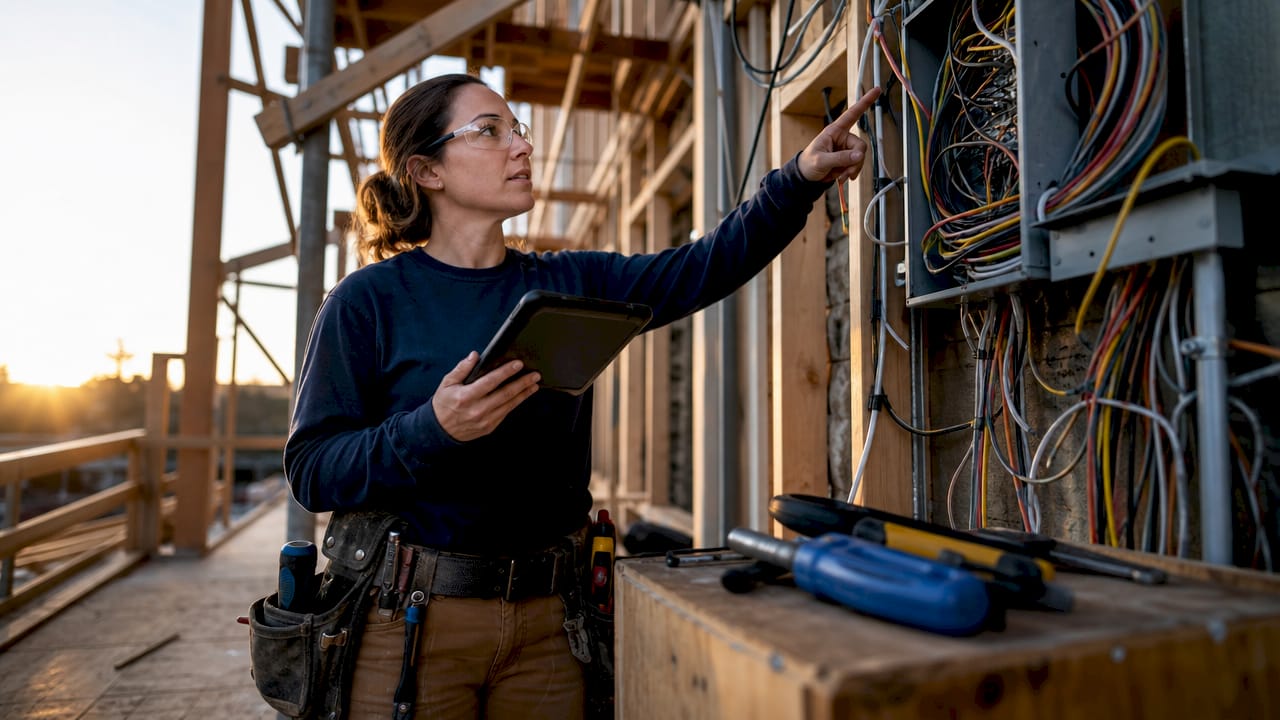
Builders who skip this step expose themselves to serious risk. Without a permit, no Authority Having Jurisdiction (AHJ) inspection occurs. That means panel upgrades, new circuit runs, and rewiring all happen behind walls with zero official verification. If a problem surfaces later, whether during a sale, an insurance claim, or a fire investigation, the builder carries the liability.
Licensing also signals that a contractor has met the state’s minimum competency standards. Most states require written exams, documented field experience, and continuing education to maintain a license. That process filters out contractors who lack the knowledge to work safely on modern electrical systems.
How does licensing enable permit acquisition and inspection compliance?
Permits require a valid electrical contractor license number to be issued. That single requirement makes licensing the operational gateway to legal electrical work on any permitted project.
The permit and inspection process works as a quality checkpoint for builders:
- A licensed contractor submits the permit application with their license number attached.
- The AHJ reviews the scope of work before any installation begins.
- Rough-in inspections occur before walls close, catching errors while corrections are still low-cost.
- Final inspections confirm the completed system meets code before occupancy approval.
- All inspection records become part of the permanent property file.
Licensed contractors manage AHJ inspections and handle correction notices before project closeout. That process prevents uninspected or non-compliant electrical installations that often accompany unlicensed work. Builders in Los Angeles and Virginia who use permitted electrical contractors consistently report cleaner project closeouts and fewer disputes at the certificate of occupancy stage.
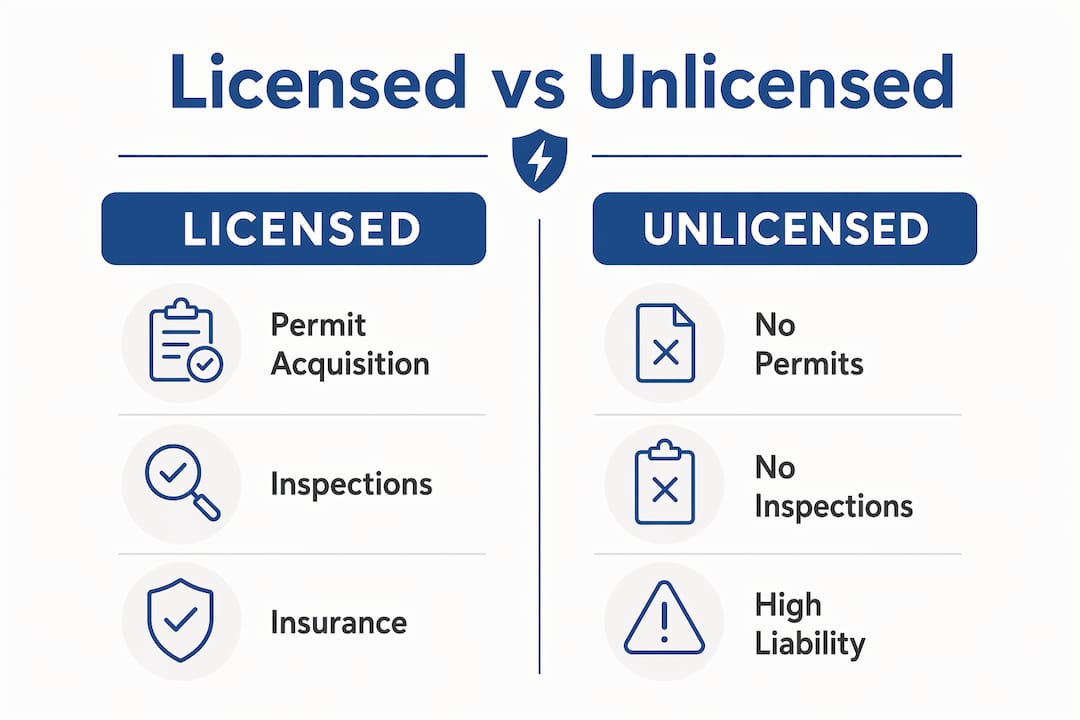
Unlicensed work skips this entire process. No permit means no inspection, no city record, and no documentation for future owners or insurers. The builder absorbs all of that risk.
Pro Tip: Always request a copy of the permit card and inspection sign-offs before authorizing final payment to your electrical contractor. This documentation protects you if questions arise during resale or insurance review.
Virginia adds another layer of complexity. The state requires a Master Electrician license to pull permits and serve as the responsible party on permitted electrical work. A Journeyman license holder cannot legally pull permits or take on that supervisory role. Builders must verify that the license tier matches the scope of the project, not just that a license exists.
What insurance and liability protections come with licensed electrical contractors?
Licensed contractors carry the insurance that protects builders from financial exposure. Many state licensing regimes mandate liability insurance, workers compensation, and surety bonds as conditions of licensure. That requirement is not administrative paperwork. It is the financial safety net that stands between a builder and a costly out-of-pocket claim.
Licensed contractors provide Certificates of Insurance (COIs) that builders can verify before work begins. Florida and California both require licensed electrical contractors to maintain active liability coverage as a condition of their license. When a COI is on file, builders have documented proof of coverage for the duration of the project.
The risks of skipping this step are concrete:
- An unlicensed contractor who causes a fire or injury carries no insurance to cover damages.
- Builder’s general liability policies often exclude claims arising from unlicensed subcontractor work.
- Insurance carriers can deny claims entirely when unpermitted electrical work is involved.
- Builders may face out-of-pocket remediation costs, legal fees, and settlement exposure.
Builders benefit from treating the license, permit, and Certificate of Insurance as a combined package for documentation and dispute resolution. Each element supports the others, and the absence of any one creates a gap that can be exploited in a claim or legal proceeding.
The financial logic is straightforward. A licensed contractor costs more upfront. An unlicensed contractor who causes a claim can cost a builder far more in remediation, legal fees, and lost insurance coverage than the original project was worth.
How does licensing improve code compliance and quality assurance?
Licensed contractors follow updated electrical codes, including the National Electrical Code (NEC) and local amendments that can be stricter than the national standard. Local amendments often exceed NEC requirements, and licensed electricians maintain continuing education requirements to stay current with those changes. That knowledge directly reduces hidden defects in finished construction.
The table below shows the key quality standards that licensed electrical work enforces on a building project:
| Quality Standard | What It Requires | Why It Matters for Builders |
|---|---|---|
| NEC and local code compliance | Current code edition plus local amendments | Prevents inspection failures and future corrective costs |
| GFCI and AFCI protection | Required in kitchens, baths, bedrooms, and outdoor areas | Reduces fire and shock hazard liability |
| Load calculations | Proper sizing of panels, circuits, and conductors | Prevents overloads and equipment failures post-occupancy |
| Inspection documentation | AHJ sign-offs at rough-in and final stages | Creates legal record for resale and insurance purposes |
| Labeling standards | Panel directories and circuit identification | Supports future maintenance and emergency response |
Permitted projects require Master Electrician oversight on the scope of work, with inspections catching errors before wall close-in. That timing is critical. Corrections made before drywall installation cost a fraction of what they cost after walls are closed.
The highest risk for builders is not visible wiring. It is failures discovered post-close-in. Licensed work includes AHJ correction management before wall closure, which eliminates the most expensive category of electrical remediation. Builders in Virginia and California who use code-compliant electrical installations report fewer resale complications and cleaner insurance histories on completed projects.
Pro Tip: Ask your electrical contractor for a copy of the load calculation worksheet before rough-in begins. If they cannot produce one, that is a red flag regardless of their license status.
Licensed vs. unlicensed electrical work: what are the real risks for builders?
The operational and legal differences between licensed and unlicensed electrical contractors are not minor. They affect every stage of a project, from permit acquisition to final inspection to long-term liability.
| Factor | Licensed Contractor | Unlicensed Contractor |
|---|---|---|
| Permit acquisition | Can legally pull permits with license number | Cannot pull permits; no legal record created |
| Insurance coverage | Carries liability insurance, workers comp, and bond | Typically carries no insurance; builder absorbs risk |
| Code compliance | Follows NEC and local amendments; inspected | No inspection; compliance unverified |
| Inspection documentation | AHJ sign-offs at each phase | No documentation; no city record |
| Builder liability | Reduced through documentation and insurance | Fully exposed; no recourse if problems arise |
| Long-term cost | Higher upfront; lower remediation risk | Lower upfront; high rework and legal risk over time |
Builders who use licensed and permitted contractors face fewer corrective costs, insurance complications, and resale issues compared to those who use unlicensed workers. Unlicensed work may appear cheaper at the contract stage, but it often leads to expensive rework and legal risk over a longer horizon.
The practical takeaway is direct. Only a properly licensed contractor can legally pull permits and serve as the responsible party on a permitted project. Builders who rely on unlicensed or lower-tier electricians to cut costs are trading short-term savings for long-term exposure. The permit and inspection trail that a licensed contractor creates is the single most effective protection a builder has against post-construction claims.
Gregbeverlyservices: licensed electrical contracting for builder projects
Gregbeverlyservices brings over 40 years of licensed electrical experience to residential and commercial construction projects across the Grand Strand area. Every project includes permit acquisition, AHJ inspection coordination, and full insurance documentation so builders have the compliance record they need at every phase.

Gregbeverlyservices handles residential construction electrical work from new builds through final inspection, along with commercial electrical services for larger projects requiring code-compliant installations and documented permitting. The team also installs EV chargers and generator systems with full permitting and inspection support. Builders who need a licensed electrical partner with a proven track record in the Grand Strand can contact Gregbeverlyservices directly to discuss project requirements and compliance needs.
FAQ
Do builders legally need a licensed electrician?
Most states require that all permitted electrical work be performed or supervised by a licensed electrical contractor. Builders who use unlicensed workers on permitted scopes face legal penalties, inspection failures, and insurance exposure.
What license tier is required to pull electrical permits?
In states like Virginia, only a Master Electrician license qualifies a contractor to pull permits and serve as the legally responsible party. A Journeyman license does not meet that requirement, regardless of the contractor’s field experience.
What happens if unlicensed electrical work is discovered?
Unlicensed electrical work typically results in stop-work orders, required remediation at the builder’s expense, and potential denial of insurance claims tied to that work. It can also complicate or block property resale.
How does a Certificate of Insurance protect a builder?
A COI from a licensed electrical contractor documents that active liability insurance and workers compensation are in place. If the contractor causes damage or injury, the builder has a verified insurance policy to pursue rather than absorbing costs directly.
Can a general contractor pull an electrical permit?
In most jurisdictions, a general contractor license does not authorize pulling electrical permits. A separately licensed electrical contractor must be named on the permit application as the responsible party for the electrical scope.
Key takeaways
Licensed electrical contractor requirements protect builders from legal, financial, and quality risks that unlicensed work cannot address.
| Point | Details |
|---|---|
| Licensing enables permits | Only a licensed contractor can legally pull permits and create an official inspection record. |
| Insurance protects builders | Licensed contractors carry liability insurance and workers comp, reducing builder financial exposure. |
| Inspections catch errors early | AHJ inspections before wall close-in prevent costly post-construction remediation. |
| License tier matters | States like Virginia require a Master Electrician license to pull permits; verify the tier before hiring. |
| Unlicensed work costs more long-term | Lower upfront cost from unlicensed contractors often leads to expensive rework and legal risk over time. |