
A licensed electrician is a credentialed professional authorized by state law to perform electrical work that meets current safety codes and local regulations. Choosing the right one protects your home, your investment, and everyone inside. This hire licensed electrician guide walks you through every step: verifying credentials, comparing written estimates, asking the right screening questions, and managing permits correctly. Gregbeverlyservices has served the Grand Strand area for over 40 years, and the process described here reflects the standards that separate reliable electrical contractors from risky shortcuts.
How to verify a licensed electrician before hiring

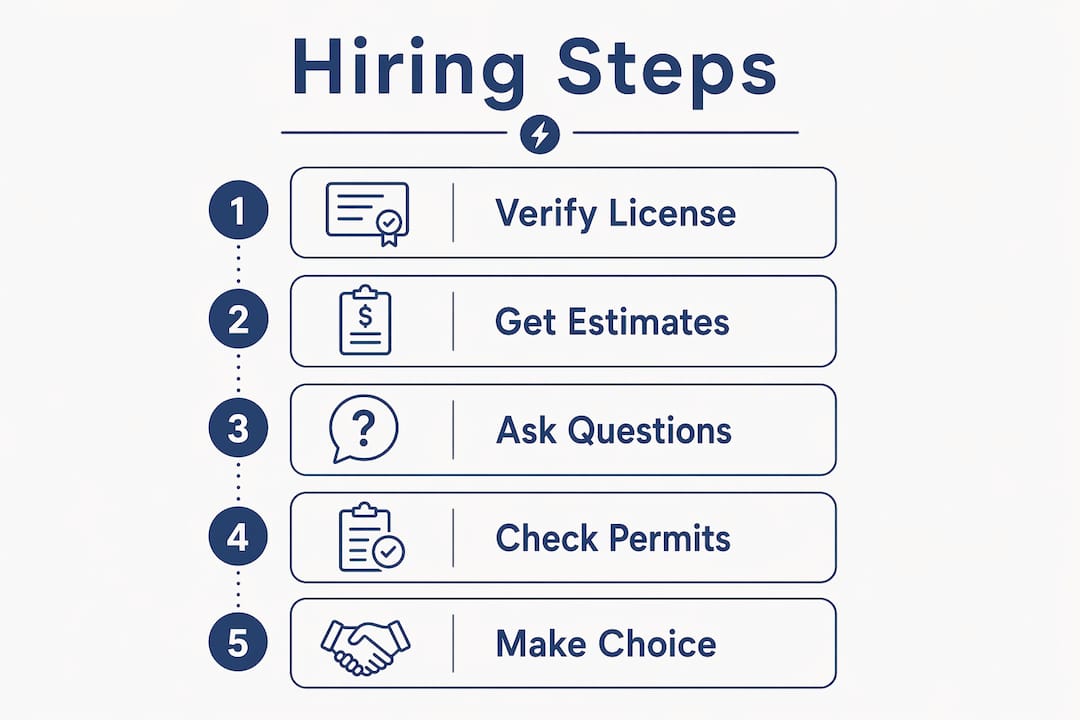
License verification is the single most important step when finding a qualified electrician. A license number proves the contractor has passed state-required exams, met experience thresholds, and agreed to follow the National Electrical Code. Trusting claimed experience alone is not enough. Verifying licensure with state authorities reduces the risk of non-compliant work and confirms that safety standards are actually met.
Follow these steps before signing any agreement:
- Request the license number in writing. Ask for it before the first site visit. Any qualified electrician provides this without hesitation.
- Search your state’s official licensing database. Most state labor or contractor boards maintain a free online lookup tool. Confirm the license is active, not expired or suspended.
- Match the name on the license to the person doing the work. The most common verification mistake is checking only the company license without confirming the individual performing or supervising the regulated work holds the proper credential.
- Request a certificate of insurance. Ask for both general liability and workers’ compensation. Confirm the company name on the certificate matches the contractor you are hiring.
- Verify insurance is current. Call the insurance provider listed on the certificate if you want added certainty. An expired policy offers zero protection.
- Check for complaints or disciplinary actions. State licensing boards often list formal complaints alongside license status. A single complaint is not always disqualifying, but a pattern is a clear warning.
Pro Tip: If the online licensing database returns unclear results, contact your state’s labor department directly. Provide the contractor’s full name, company name, and license number, and ask a staff member to confirm the status verbally.
Licensing and permit requirements vary by state and by project type. Matching the credential level to your specific project is a legal and safety requirement, not a formality.
Why you need at least three written estimates
Written estimates are the foundation of a fair hiring decision. Verbal quotes are unreliable and unenforceable. Obtaining at least three written estimates with identical scopes of work gives you a real basis for comparison.
The key word is “identical.” If one quote covers a panel upgrade with new breakers, conduit, and a permit, while another covers only labor, you are not comparing the same job. Before requesting quotes, write out your project scope in plain language and give every contractor the same description.
What a complete written estimate should include:
- Scope of work described in specific terms (circuit counts, wire gauge, panel amperage)
- Materials listed by brand or grade
- Permit fees and who is responsible for pulling the permit
- Project timeline with start and completion dates
- Warranty terms for both labor and materials
- Payment schedule and change-order policy
Pro Tip: Create a simple side-by-side comparison sheet. List each line item from the most detailed quote down the left column, then check whether each competing quote includes or excludes that item. This reveals hidden gaps instantly.
A lower total price often signals omitted scope or cheaper components. Lower bids frequently exclude necessary elements such as permits, quality materials, or post-job cleanup. Inferior materials reduce service life and can cause inspection failures that cost more to fix than the original savings.
| Comparison factor | What to look for |
|---|---|
| Permit inclusion | Explicitly listed, with fee and responsibility assigned |
| Materials specified | Brand or grade named, not just “standard wire” |
| Warranty terms | Labor and materials covered separately with durations |
| Timeline | Start date and completion date both stated |
| Change-order policy | Written process for cost changes mid-project |
Analyzing quotes this way takes 30 minutes and can save thousands of dollars in callbacks, failed inspections, or outright safety hazards.
What are the best questions to ask an electrician?
Screening questions reveal far more than a license number alone. The best questions to ask an electrician cover qualifications, project specifics, accountability, and post-job expectations. Asking critical screening questions about licensing, insurance, permits, materials, timeline, warranty, and cleanup confirms code compliance and workmanship accountability before any money changes hands.
Use this list during your initial phone call or site visit:
- “Are you licensed for this type of work in this state?” License types vary. A journeyman license covers different work than a master electrician license. Confirm the credential matches your project.
- “Who will actually perform the work on my property?” The person you meet may not be the one on the job. Confirm whether a licensed electrician or a supervised apprentice will handle the regulated portions of the project. This question directly addresses the individual credential verification issue that catches many homeowners off guard.
- “Can you provide a current certificate of insurance?” Ask for both general liability and workers’ compensation. If a worker is injured on your property without workers’ comp coverage, you may be liable.
- “Will this project require a permit, and who pulls it?” A qualified contractor answers this question without hesitation. If they suggest skipping the permit to save money, walk away.
- “What materials and brands will you use?” Vague answers like “standard materials” are a red flag. A professional specifies wire gauge, breaker brand, and conduit type.
- “What is the project timeline, and what could delay it?” Honest contractors identify realistic risks upfront, such as material lead times or inspection scheduling.
- “What warranty do you offer on labor and materials?” Labor warranties typically range from one to two years. Materials warranties depend on the manufacturer. Get both in writing.
- “How do you handle cleanup and site restoration?” Electrical work creates debris. Confirm the contractor removes all materials and restores any opened walls or ceilings.
- “How are change orders handled?” Scope changes happen. A professional contractor uses a written change-order process with your approval before adding costs.
You can learn more about what a licensed electrician does day-to-day from Gregbeverlyservices’ homeowner’s guide to licensed electricians, which covers the full scope of residential electrical work.
Do you need a permit for your electrical project?
Permits are legally required for most electrical work beyond simple fixture swaps. Skipping the permit process creates serious risks: failed home inspections at resale, voided homeowner’s insurance claims, and unsafe installations that no inspector ever reviewed. For high-risk jobs like panel upgrades or rewiring, the permit and inspection plan belongs in the bid from day one.
Projects that typically require a permit:
- Service panel upgrades or replacements
- New circuit installations
- Whole-home rewiring
- EV charger installations
- Generator hookups and transfer switch installations
- Major additions or renovations involving new wiring
The permit process works like this: the electrician pulls the permit from your local building department before work begins, completes the installation, and then schedules an inspection with a code official. The inspector reviews the work against the current adopted electrical code for your jurisdiction. Only after passing inspection is the permit closed.
Who should pull the permit? Your licensed electrician should always pull the permit, not you. When a homeowner pulls their own permit, they take on legal responsibility for the work meeting code. When a licensed contractor pulls it, that responsibility stays with the professional.
Experienced property managers include permit and inspection plans as a mandatory part of contractor bids. This practice prevents schedule disruptions and eliminates costly rework caused by unpermitted installations discovered later.
Gregbeverlyservices publishes a detailed breakdown of residential electrical permit types that explains which projects trigger permit requirements in the Grand Strand area. Reviewing it before you hire gives you a clear baseline for what to expect from any contractor you consider.
Key Takeaways
Hiring a licensed electrician requires verifying credentials through official state databases, comparing at least three detailed written estimates, asking specific screening questions, and confirming the permit and inspection plan before work begins.
| Point | Details |
|---|---|
| Verify the individual, not just the company | Confirm the person performing the work holds the active state credential, not only the business license. |
| Get three written estimates with identical scope | Verbal quotes are unreliable; written estimates with matching scope reveal true cost differences. |
| Ask nine specific screening questions | Cover licensing, insurance, permits, materials, timeline, warranty, and change-order policy before hiring. |
| Require a permit and inspection plan upfront | The licensed contractor should pull all permits and schedule inspections as part of the agreed scope. |
| Match credential level to project complexity | License types vary; a master electrician license covers different work than a journeyman credential. |
Gregbeverlyservices: licensed electrical work you can count on
Gregbeverlyservices has provided licensed residential and commercial electrical services in the Grand Strand area for over 40 years. Every project follows local safety codes, and the team handles permits and inspections as a standard part of the job, not an afterthought.

Whether you need residential electrical services for a panel upgrade, a new circuit, or a full renovation, or you are a property manager looking for dependable commercial electrical services, Gregbeverlyservices brings the credentials, insurance, and transparent communication this guide describes. The team also specializes in EV charger installation and generator services for homeowners who want reliable backup power. Contact Gregbeverlyservices directly to request a written estimate and confirm licensing details before any work begins.
FAQ
What does a licensed electrician license actually prove?
A state electrical license confirms the contractor has passed required exams, met experience requirements, and agreed to follow the National Electrical Code. It is the baseline legal authorization to perform regulated electrical work in that state.
How do I verify an electrician’s license is active?
Search your state’s contractor licensing board or labor department website using the contractor’s license number. Confirm the license is active and matches the individual or company performing the work.
Can I skip the permit to save money on electrical work?
Skipping a permit creates legal liability, voids insurance claims, and can force costly rework if discovered during a home sale inspection. Including the permit and inspection plan in the bid is a best practice for safety and compliance.
Why should I get three estimates instead of one?
Three written estimates with identical scopes reveal real price differences and expose contractors who omit permits, inferior materials, or warranties from their bids. One quote gives you no basis for comparison.
What is the difference between a journeyman and a master electrician?
A journeyman electrician is licensed to perform electrical work under supervision or independently depending on state rules. A master electrician holds a higher credential, can pull permits, and is legally responsible for the work performed on a project.